




It’s a tale as old as time, or at least as old as Hollywood: a studio option rights to a promising novel, adapts it for the screen, and creates a cultural phenomenon that completely overshadows the source material. While literary purists will always argue that "the book was better," there are undeniable instances where the cinematic adaptation becomes the definitive version of the story, eclipsing the original author's work in public consciousness.
For this deep dive, we are looking at the films that didn't just succeed—they defined a generation, created a franchise, or became a universal language, all while leaving their humble book beginnings in the dust.
The Box Office Titans: When the Adaptation Takes Over
These cinematic behemoths are perfect examples of movies that transcended their print origins to become global brands.
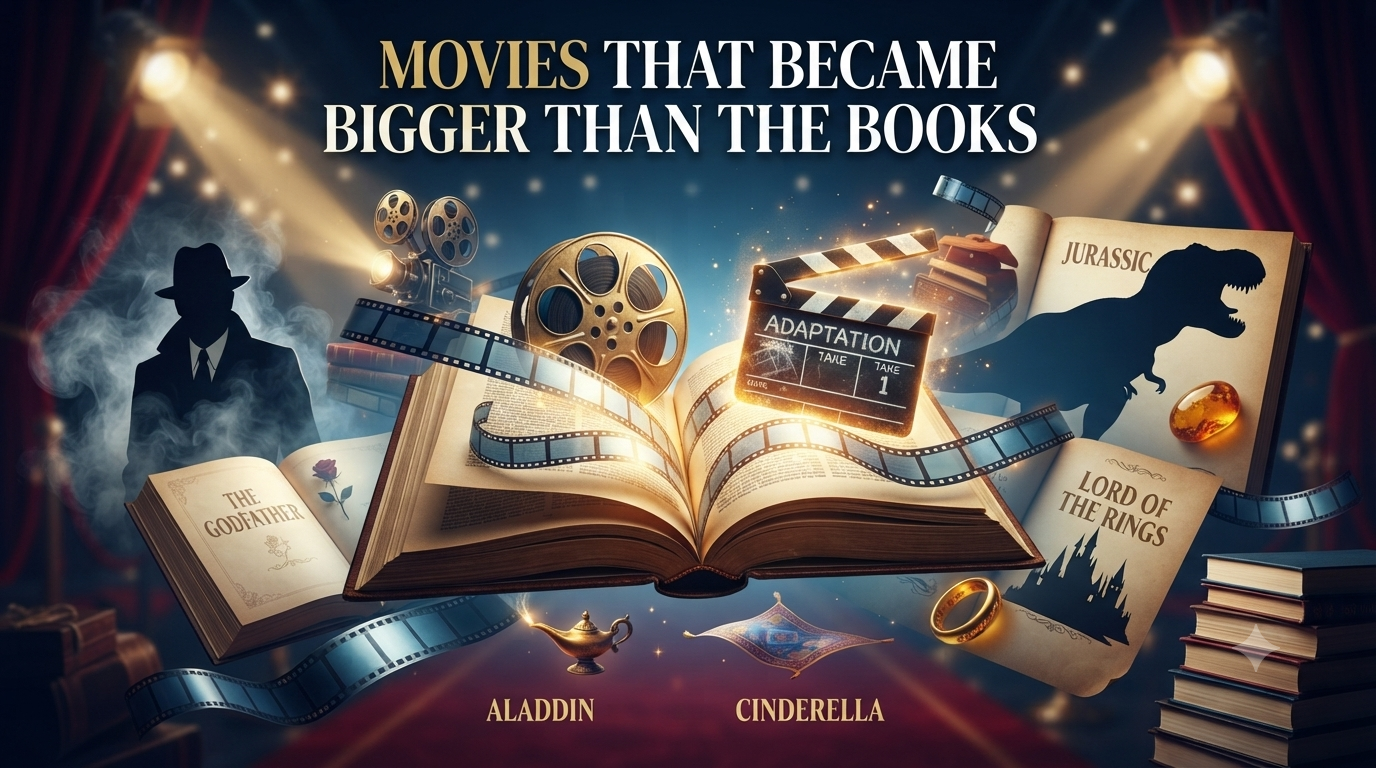
- The Godfather (1972): Mario Puzo’s 1969 novel was a bestseller, but Francis Ford Coppola’s film adaptation is widely considered one of the greatest movies ever made. The film’s casting, dialogue, and iconic score cemented it as a cultural touchstone that the book, despite its quality, simply could not match in scope or influence.
- Jurassic Park (1993): Michael Crichton wrote a successful techno-thriller, but Steven Spielberg turned it into a cinematic event that defined a decade. The visual effects, the pacing, and the sheer terror of the T-Rex made the film the undisputed "definitive" Jurassic experience, largely simplifying the novel’s darker, more complex themes for a wider audience.
- The Lord of the Rings: The Fellowship of the Ring (2001): J.R.R. Tolkien created the modern fantasy genre, but Peter Jackson’s trilogy brought Middle-earth to life in a way that previous generations couldn't have imagined. For hundreds of millions, the faces of Elijah Wood and Viggo Mortensen *are* Frodo and Aragorn, and the films’ visual language has overwritten the mental images of countless readers.
Cultural Phenomenon: When the Characters Become Household Names
Beyond just box office, these films made their characters and worlds part of the cultural lexicon.
- Fight Club (1999): Chuck Palahniuk’s novel was a cult hit with a relatively small readership. David Fincher’s film, with its stylish direction and Brad Pitt’s star-making turn as Tyler Durden, exploded into a mainstream phenomenon, becoming a defining counter-culture movie for the late 90s.
- The Silence of the Lambs (1991): Thomas Harris wrote the character Hannibal Lecter, but Anthony Hopkins’ chilling, Oscar-winning performance made him a household name. The film swept the "Big Five" Oscars and became only the third horror-thriller to win Best Picture, an achievement far beyond the novel’s original critical and commercial success.
Case Study: The "Disneyfication" Effect
Perhaps the most dramatic examples come from Disney, where the original stories are often dark, violent folk tales that have been completely rewritten for the screen.
| Story Title | Original Source (Folk Tale / Novel) | Disney Adaptation |
|---|---|---|
| Cinderella | Grimm’s Fairy Tales: Dark, violent, with mutilation | Disney (1950): A sweet, magical, rags-to-riches story |
| The Little Mermaid | Hans Christian Andersen: A tragic, painful tale of sacrifice | Disney (1989): A fun musical with a happy ending |
| Bambi | F. Salten: A dark, existential novel about the life of a deer | Disney (1942): A heartfelt, tear-jerking story about loss |
Conclusion: Two Different Mediums, Two Different Legacies
Ultimately, "bigger" can mean different things. A book can be deeper, more complex, and more personally impactful for an individual reader. However, a movie can have a wider, more immediate, and more unified cultural impact, creating a shared experience for millions.
"The films on this list don't invalidate the books they were based on; rather, they prove the immense power of cinema to take a story and make it a myth."
What movie do you think became bigger than its book? Let us know in the comments!