





Introduction
Social media has entered a new era in 2026. The days when success depended solely on viral dances, perfectly curated feeds, and trending hashtags are rapidly fading. Today’s audiences want something entirely different: authenticity, meaningful conversations, useful content, and genuine human connections. As platforms continue evolving, creators, brands, and everyday users are changing how they create, discover, and engage with content online.
Artificial intelligence has transformed content creation, but it has also increased the demand for real people sharing real experiences. Users are becoming more selective about what they consume, rewarding creators who provide value instead of chasing algorithms. Meanwhile, social platforms are expanding their features to support longer videos, private communities, and search-friendly content that helps people find reliable information quickly.
For businesses, influencers, marketers, and content creators, understanding these trends isn’t optional—it’s essential. Those who adapt early are building loyal audiences and stronger communities, while those relying on outdated strategies are finding it harder to stand out.
From the rise of conversational “yapping” videos to the growing importance of social search and private online communities, these are the biggest social media trends shaping digital culture in 2026.
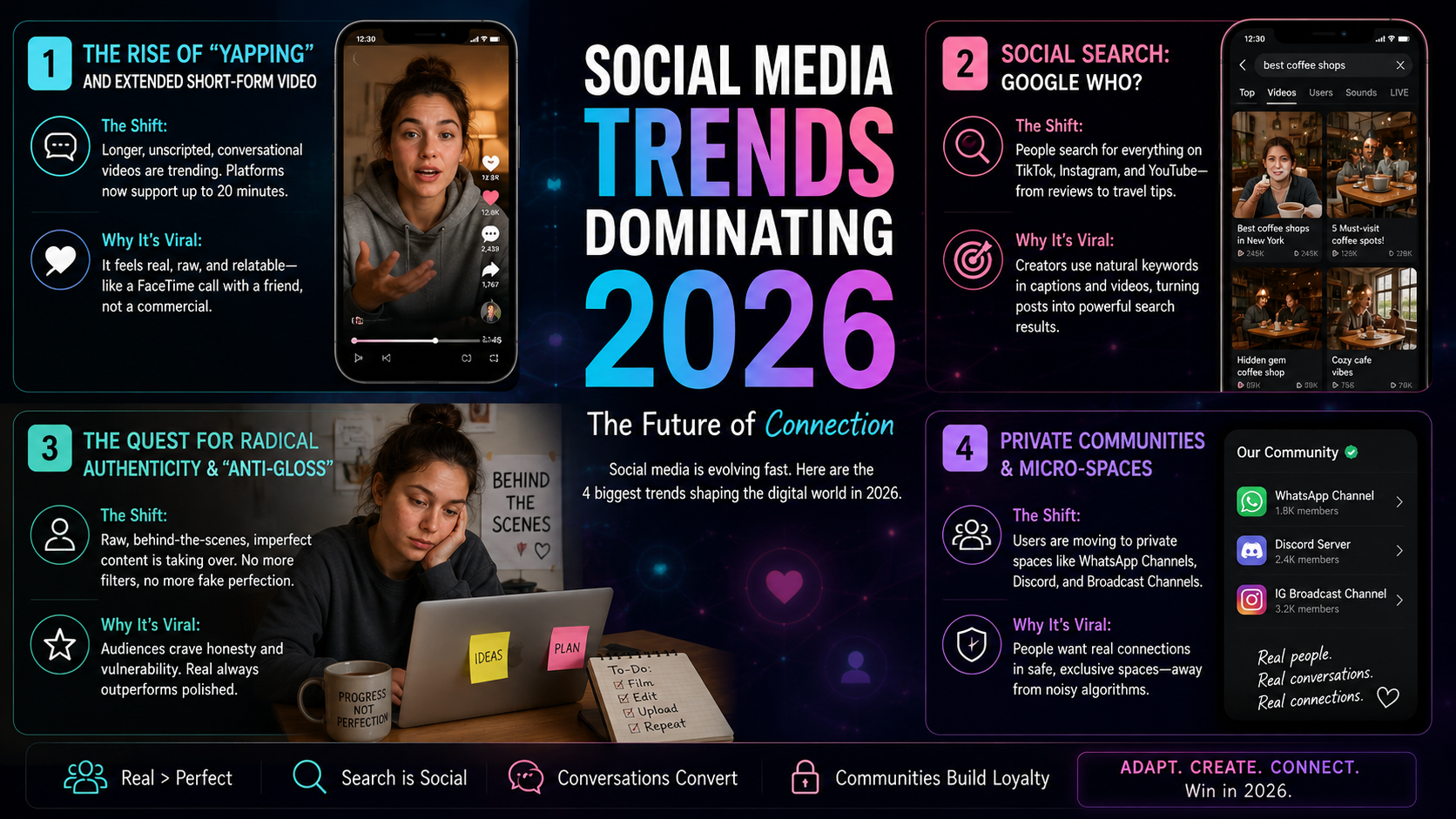
1. The Rise of “Yapping” and Extended Short-Form Video
For years, short-form content dominated every major social platform. Videos became faster, shorter, louder, and more heavily edited in an effort to capture shrinking attention spans. Quick cuts, flashy transitions, trending audio, and rapid storytelling defined the creator economy.
In 2026, however, audiences are embracing something completely different.
Longer, more relaxed, conversation-style videos have become one of the internet’s fastest-growing content formats.
The Shift Toward Longer Conversations
Platforms such as TikTok, Instagram Reels, and YouTube Shorts have expanded video length limits, allowing creators to tell more complete stories.
Instead of rushing through information in thirty seconds, creators now spend several minutes discussing personal experiences, opinions, lessons, or everyday life.
This trend has become widely known as “yapping.”
Rather than scripting every sentence, creators simply sit down, look into the camera, and speak naturally.
Topics include:
- Daily life updates
- Career advice
- Relationship experiences
- Productivity tips
- Mental health discussions
- Travel stories
- Personal reflections
These videos feel less like polished advertisements and more like genuine conversations between friends.
Why “Yapping” Is Going Viral
Audiences have grown tired of content that feels overly produced.
People now appreciate creators who speak honestly, show emotion, and allow conversations to flow naturally.
Longer conversational videos create stronger emotional connections because viewers spend more time with the creator.
Instead of chasing constant entertainment, many users now seek authenticity, depth, and meaningful storytelling.
Creators who embrace this relaxed style often experience:
- Longer watch times
- Higher audience retention
- More comments
- Stronger community engagement
- Increased trust
Sometimes, simply talking honestly to the camera performs better than expensive editing.
2. Social Search: Google Who?
The way people search for information online has changed dramatically.
For decades, traditional search engines were the first destination whenever someone needed answers.
Today, younger generations increasingly begin their searches on social media.
The New Search Behavior
Instead of typing questions into Google, users now search directly on:
- TikTok
- YouTube
People look for:
- Restaurant recommendations
- Travel itineraries
- Product reviews
- Fashion inspiration
- Makeup tutorials
- Fitness advice
- Local attractions
- Cooking recipes
Video content often provides faster, more visual, and more trustworthy answers than traditional search results.
Watching someone demonstrate a product or visit a restaurant creates greater confidence than reading anonymous reviews.
Why Social Search Is Winning
Users value authenticity.
Seeing real people share experiences feels more believable than polished advertisements.
Creators also explain information visually, making complex topics easier to understand.
Instead of scrolling through multiple websites, viewers receive demonstrations, opinions, and recommendations in a single video.
SEO Has Changed
Modern creators are optimizing their content differently.
Instead of relying only on hashtags, they naturally include searchable keywords in:
- Video titles
- Captions
- Spoken dialogue
- On-screen text
This allows videos to appear in search results both inside social platforms and on traditional search engines.
Social media has evolved from entertainment into one of the internet’s largest search ecosystems.
3. The Quest for Radical Authenticity and “Anti-Gloss”
As artificial intelligence becomes increasingly capable of producing realistic images, videos, and voices, audiences have become more skeptical of overly polished content.
Perfect feeds no longer guarantee trust.
In many cases, they actually reduce it.
The Shift Toward Real Life
The internet is experiencing an “anti-gloss” movement.
Instead of presenting flawless lifestyles, creators are sharing:
- Behind-the-scenes moments
- Mistakes
- Failed projects
- Daily routines
- Honest emotions
- Unedited videos
- Real conversations
Brands are following the same approach by showing employees, workplaces, and creative processes instead of relying solely on polished marketing campaigns.
Why Authentic Content Performs Better
Modern audiences can quickly recognize scripted advertising.
People increasingly prefer creators who admit challenges, celebrate progress instead of perfection, and communicate honestly.
Authenticity creates emotional connection because viewers relate to imperfections.
Whether it’s messy desks, unfinished projects, or honest conversations about failure, these moments often receive more engagement than carefully staged content.
Building Trust Through Transparency
Transparency has become one of the strongest currencies on social media.
Successful creators openly discuss:
- Their creative process
- Business decisions
- Personal struggles
- Lessons learned
- Career growth
- Behind-the-scenes work
Showing reality helps audiences feel included rather than marketed to.
4. Private Communities and Micro-Spaces
Public social media feeds have become increasingly crowded.
Algorithms determine what users see, competition for attention continues growing, and meaningful conversations often disappear beneath endless viral content.
As a result, many people are moving toward smaller, more private online communities.
The Shift Away From Public Timelines
Instead of relying entirely on public posts, users now spend more time in:
- WhatsApp Channels
- Discord communities
- Instagram Broadcast Channels
- Telegram groups
- Private Facebook Groups
These smaller spaces allow members to connect without constantly competing against algorithms.
Why Private Communities Are Growing
People want meaningful interaction rather than endless scrolling.
Private groups offer:
- More personal conversations
- Faster responses
- Stronger relationships
- Exclusive content
- Direct communication
Instead of speaking to millions of strangers, creators communicate directly with loyal followers.
This creates a stronger sense of belonging.
The Future of Community Building
Brands are increasingly investing in community-first marketing.
Rather than focusing exclusively on follower counts, they prioritize engagement, loyalty, and trust.
Private communities allow businesses to:
- Share exclusive updates
- Collect customer feedback
- Launch products
- Offer early access
- Build long-term relationships
In 2026, successful creators are no longer simply building audiences—they’re building communities.
5. Why These Trends Matter for Creators and Businesses
Every major social media trend points toward one clear message:
People want human connection.
Algorithms may continue evolving, but audiences consistently reward creators who provide value, honesty, and authenticity.
Successful content in 2026 focuses on:
- Solving problems
- Sharing experiences
- Educating audiences
- Building trust
- Creating conversations
- Encouraging community participation
Instead of chasing every viral trend, creators who consistently deliver meaningful content are building sustainable, long-term growth.
Businesses are also shifting away from aggressive advertising toward storytelling, customer engagement, and relationship building.
The brands that succeed are those that listen as much as they speak.
Conclusion
Social media in 2026 looks very different from just a few years ago. Fast edits, polished perfection, and endless hashtag strategies are giving way to longer conversations, authentic storytelling, search-friendly content, and close-knit digital communities.
The rise of “yapping” videos shows that audiences value genuine personalities over flawless production. Social search is changing how people discover information, making platforms like TikTok, Instagram, and YouTube powerful alternatives to traditional search engines. At the same time, the demand for radical authenticity is encouraging creators and brands to embrace transparency instead of perfection, while private communities are redefining how meaningful online relationships are built.
For creators, marketers, and businesses, these trends represent more than temporary internet habits—they signal the future of digital communication. Success now depends on being helpful, relatable, and trustworthy rather than simply being viral.
As technology continues to evolve, one thing remains constant: people connect most deeply with people. Those who focus on authenticity, value, and community will continue to thrive in the ever-changing social media landscape of 2026.