




We often think of cinema as an escape. We buy a ticket, sit down in a dark room, buy an oversized bucket of popcorn, and watch a glowing screen tell a story that exists entirely outside of our everyday lives. For two hours, we pretend to be wizards, space explorers, detectives, or star-crossed lovers. When the credits roll, we step back out into the mundane reality of traffic, bills, and routine.
Yet, the boundary between the silver screen and the real world is far more porous than we realize. Throughout film history, movies have occasionally reached out and fundamentally altered society in bizarre, profound, and entirely accidental ways. From reshaping global travel destinations and destroying entire industries to sparking technological revolutions and altering human behavior, here are some fascinating movies that accidentally changed real life.
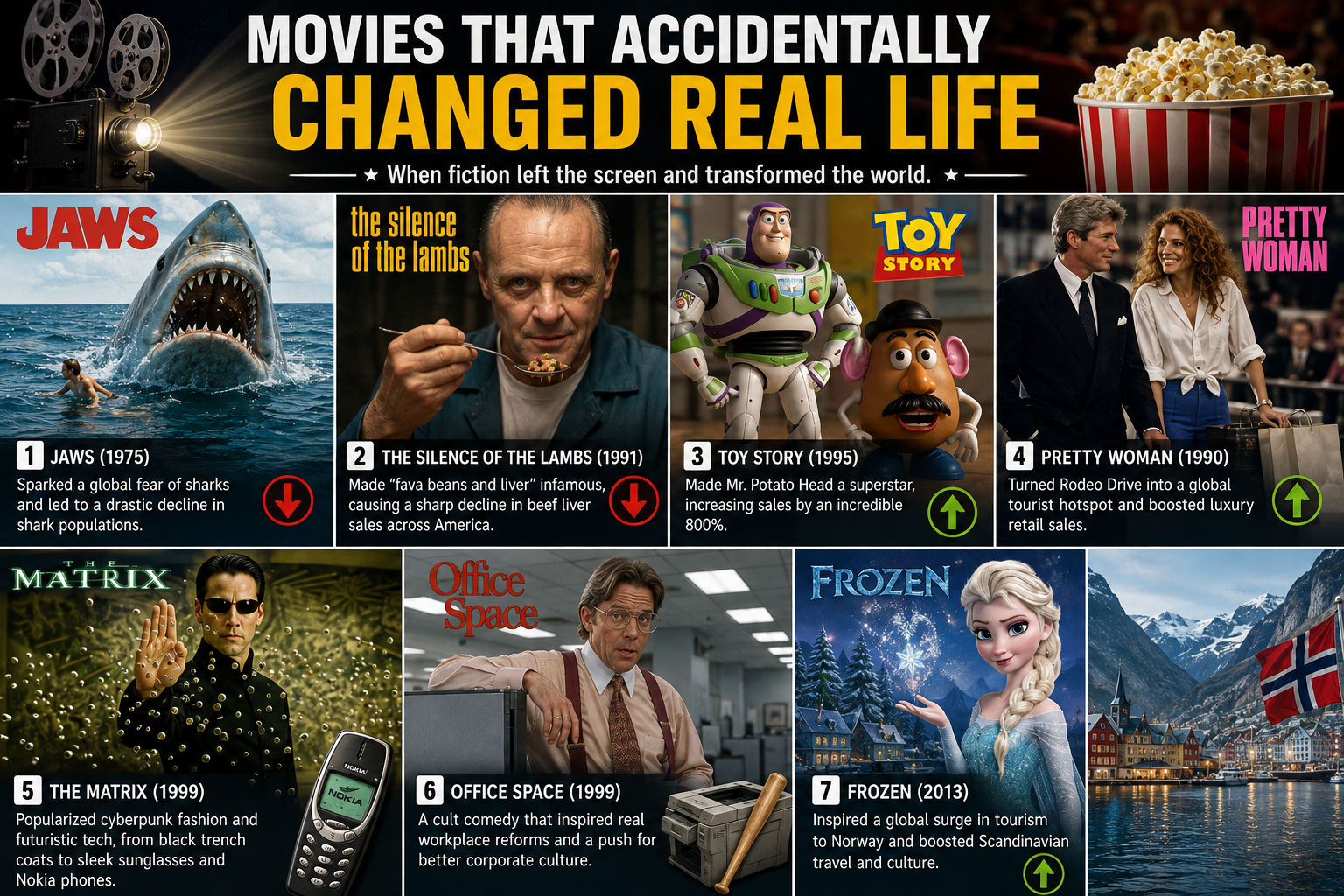
1. Jaws (1975): The Accidental War on Sharks
Steven Spielberg’s legendary summer blockbuster about a massive great white terrorizing a small beach community terrified a generation. It single-handedly invented the modern summer "blockbuster" and made millions of moviegoers terrified to step foot in the ocean.
The Real-Life Impact: Unfortunately, the film triggered an unintended ecological disaster. Jaws launched a global wave of recreational shark hunting. Sport fishermen flocked to the Atlantic coast to catch trophy sharks, drastically decimating local shark populations. Furthermore, Peter Benchley, the author of the original novel, spent the rest of his life advocating for shark conservation, deeply regretting the irrational demonization and slaughter of a vital marine apex predator that the movie inadvertently caused.
2. The Silence of the Lambs (1991): The Collapse of Beef Liver Sales
Jonathan Demme’s chilling psychological thriller features one of the most famous and unsettling lines in cinematic history: Anthony Hopkins’ Hannibal Lecter calmly explaining that he ate a census taker's liver "with some fava beans and a nice Chianti."
The Real-Life Impact: While Chianti wine sales experienced a massive, unprecedented spike following the film's release, the American beef and pork industry suffered an immediate, bizarre economic blow. Supermarket sales of beef liver plummeted drastically across the United States. Shoppers simply couldn't disassociate the organ meat from the sophisticated, cannibalistic serial killer, proving that Hollywood can sway consumer grocery habits overnight.
3. Toy Story (1995): How Buzz Lightyear Tanked a Classic Toy
Pixar’s groundbreaking 1995 animated masterpiece introduced the world to computer-generated feature films and cemented the buddy dynamic between Woody the cowboy and Buzz Lightyear the space ranger.
The Real-Life Impact: Before production began, Pixar approached the legendary toy manufacturer Mattel to feature Barbie in the film. Mattel flatly refused, believing the movie would bomb. Pixar pivoted and instead asked Hasbro if they could feature their classic board game, Mr. Potato Head. Hasbro agreed. Following the movie's runaway box office success, Mr. Potato Head sales skyrocketed by an astonishing 800 percent! Mattel watched in horror as they missed out on one of the greatest product placement windfalls in toy history, quickly scrambling to license Barbie for the subsequent sequels.
4. Pretty Woman (1990): The Accidental Economic Boom for a Luxury Street
Garry Marshall’s romantic comedy starring Julia Roberts and Richard Gere became a global cultural phenomenon, telling the charming modern fairy tale of a corporate raider who falls in love with a Hollywood Boulevard escort.
The Real-Life Impact: In the film, Gere's character takes Roberts shopping on Rodeo Drive in Beverly Hills, only for snobby boutique staff to look down their noses at her and refuse service. When the movie hit theaters, real-life luxury retailers on Rodeo Drive suddenly found themselves flooded with everyday tourists and shoppers walking in, asking to be treated like Julia Roberts, and eagerly spending thousands of dollars. The film transformed a notoriously exclusive, intimidating shopping strip into a globally famous tourist destination.
5. The Matrix (1999): The Cyberpunk Fashion and Phone Revolution
The Wachowskis’ mind-bending sci-fi action film introduced revolutionary visual effects like "bullet time," philosophical dilemmas about simulated reality, and a distinct, ultra-cool aesthetic defined by floor-length leather trench coats and tiny dark sunglasses.
The Real-Life Impact: Beyond sparking a multi-billion-dollar franchise, The Matrix permanently altered late-90s and early-2000s fashion. Sleek, futuristic cyberpunk styles flooded global clothing runways. Furthermore, the film popularized distinct Nokia slider and flip phones, making futuristic mobile communication devices the must-have tech accessory for teenagers and business professionals alike.
6. Office Space (1999): The Relatable Anthem That Inspired Workplace Reform
Mike Judge’s satirical comedy about the soul-crushing monotony of cubicle life bombed at the box office upon its initial release, but quickly became a massive cult classic on home video.
The Real-Life Impact: The film's iconic scenes—such as employees aggressively destroying a malfunctioning office printer in a field with baseball bats—resonated deeply with corporate workers worldwide. It became a cultural touchstone for discussing corporate burnout, leading to widespread shifts in office culture. Companies began modernizing workspace environments, introducing casual dress codes, and rethinking rigid middle-management structures to prevent employees from feeling trapped in a soul-crushing loop.
7. Frozen (2013): The Unstoppable Global Surge in Nordic Tourism
Disney’s animated musical about two royal sisters in the fictional kingdom of Arendelle captured the hearts of children worldwide, spawning the inescapable anthem "Let It Go."
The Real-Life Impact: While Arendelle was fictional, Disney’s design team drew heavy aesthetic inspiration from Norway’s stunning landscapes, architecture, and folk art. Following the film's release, tourism to Norway surged to historic highs. Travel agencies reported massive spikes in bookings for Scandinavian fjords, and Norwegian cultural exports, from traditional clothing to travel guides, experienced unprecedented commercial demand.
Conclusion: The Power of the Silver Screen
Movies are far more than passive entertainment. They are cultural catalysts. Whether they accidentally trigger economic booms, shift consumer habits, or alter how we interact with the natural world, films possess a quiet, unpredictable power to rewrite our shared reality.
The next time you sit down in a dark theater, remember: you aren't just watching a story unfold. You might just be watching the blueprint for tomorrow's world.