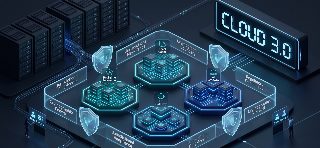






The Digitalization of Critical Infrastructure
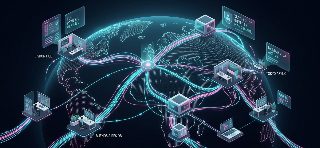
Modern society runs on interconnected digital systems.
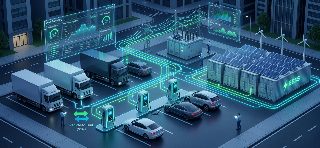
Electricity grids rely on software to manage power distribution. Water treatment facilities use networked systems to monitor and control operations. Financial institutions depend on digital networks to process transactions, while hospitals increasingly rely on connected technologies to deliver essential services.
This digital transformation has created enormous benefits.
But it has also created a new vulnerability.
As more physical infrastructure becomes dependent on software, networks, and cloud-based systems, the consequences of a successful cyberattack can extend far beyond lost data or temporary IT disruption.
A cyber incident affecting critical infrastructure could potentially disrupt essential services, damage economic activity, and create significant risks to public safety.
Cybersecurity is therefore no longer simply an IT department responsibility.
It is becoming a fundamental component of national security and economic resilience.
The New Frontier: AI-Powered Cyber Threats
The cybersecurity threat landscape is evolving rapidly.
State-sponsored groups, organized cybercrime networks, and other sophisticated threat actors are increasingly exploring artificial intelligence as a tool for improving the speed and scale of their operations.
AI can potentially assist attackers with tasks such as reconnaissance, content generation, vulnerability research, and highly personalized social engineering.
This creates a significant challenge for defenders.
Traditional security systems often rely on known patterns and established indicators of compromise. More adaptive attacks can change tactics and behavior, making them more difficult to detect using conventional approaches alone.
The result is an increasingly complex contest between automated attack capabilities and automated defense systems.
The Rise of Adaptive Threats
Modern cyber threats are becoming more dynamic.
Attackers can combine automation with large-scale data collection to identify potential targets and customize their approaches.
Social engineering is one area where AI could have a particularly significant impact. More convincing and personalized messages can make it increasingly difficult for individuals to distinguish legitimate communication from malicious attempts.
At the same time, automated tools can potentially accelerate the discovery of weaknesses across large digital environments.
This means cybersecurity teams must increasingly defend against threats that operate at machine speed.
The traditional model of waiting for a human analyst to manually identify every threat is no longer sufficient on its own.
The Imperative of Zero Trust
To address these risks, many organizations are moving away from traditional perimeter-based security models.
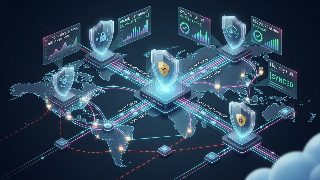
The modern approach increasingly emphasizes Zero Trust architecture.
The core principle is straightforward:
Never trust. Always verify.
Instead of assuming that users or devices are trustworthy simply because they are inside a corporate network, Zero Trust frameworks continuously evaluate identity, access privileges, device security, and contextual risk.
This approach is particularly relevant in a world where employees work remotely, organizations rely on cloud platforms, and third-party suppliers have access to critical systems.
Zero Trust does not eliminate cyber risk, but it can reduce the potential impact of compromised accounts and unauthorized access by limiting unnecessary privileges.
Cyber Risk Moves Into the Boardroom
Cybersecurity is also becoming a leadership issue.
Executives and boards are increasingly expected to understand their organization’s cyber risk exposure and ensure that appropriate safeguards are in place.
This includes maintaining effective incident response plans, managing third-party risks, protecting sensitive data, and ensuring that security investments align with the organization’s most critical assets.
The shift is significant.
Cybersecurity is no longer viewed simply as a technical expense.
It is increasingly treated as a strategic risk-management priority.
Securing the Digital Supply Chain
One of the biggest challenges facing modern organizations is that their security does not depend entirely on their own systems.
Businesses often rely on vendors, cloud providers, software developers, contractors, and other third parties.
A vulnerability within one part of this interconnected ecosystem can potentially create risks across many organizations.
For this reason, supply-chain security is becoming a central part of cybersecurity strategy.
Organizations must increasingly evaluate not only their own defenses but also the security practices of the companies and technologies they depend on.
Building a More Resilient Digital Foundation
Protecting critical infrastructure will require collaboration across industries and national borders.
Governments, technology companies, infrastructure operators, financial institutions, and cybersecurity organizations must share relevant threat intelligence and coordinate responses to emerging risks.
At the same time, organizations must invest in resilience rather than focusing exclusively on prevention.
No defense system can guarantee that every attack will be stopped.
The ability to detect incidents quickly, contain damage, restore operations, and learn from failures is becoming equally important.
The Road Ahead
The cybersecurity landscape will continue to evolve as artificial intelligence becomes more deeply integrated into both offensive and defensive technologies.
Organizations that rely solely on traditional perimeter defenses may struggle to keep pace with increasingly adaptive threats.
The future of cybersecurity will likely depend on a combination of:
- Zero Trust security architectures.
- AI-assisted threat detection.
- Continuous monitoring.
- Strong identity and access controls.
- Secure software development.
- Supply-chain risk management.
- Cross-industry threat intelligence.
- Rapid incident response and recovery.
Conclusion
The digital transformation of critical infrastructure has created a new reality.
The systems that power our economies and support everyday life are increasingly connected to the internet and dependent on complex software ecosystems.
That connectivity creates enormous opportunities—but also significant vulnerabilities.
As cyber threats become more sophisticated and AI accelerates the speed of both attacks and defenses, cybersecurity must become a shared responsibility across governments, businesses, technology providers, and infrastructure operators.
The ultimate goal is not simply to build systems that are impossible to attack.
It is to build systems that can anticipate threats, withstand disruption, recover quickly, and continue operating under pressure.
In an increasingly connected world, cybersecurity is no longer just about protecting data. It is about protecting the infrastructure of modern civilization.