





Introduction
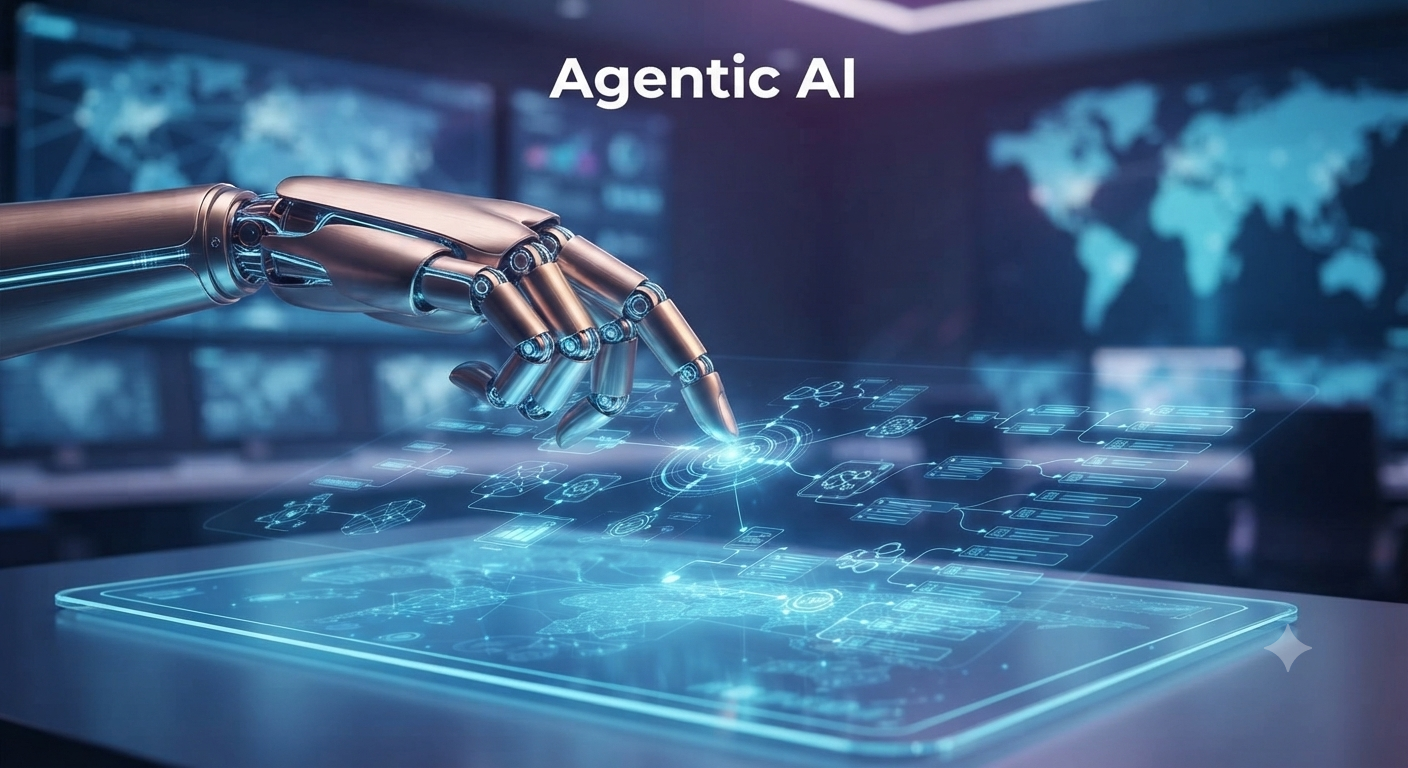
The era of simple AI interactions is rapidly coming to an end. While traditional AI models were built to respond to prompts and answer questions, 2026 marks the rise of Agentic AI—intelligent systems capable of pursuing objectives independently, making informed decisions, and using digital tools to complete complex, end-to-end tasks.
Rather than acting solely as conversational assistants, these AI agents are becoming proactive collaborators that can manage workflows, adapt to changing conditions, and continuously improve their performance.
From Individual Tasks to Intelligent Systems
Traditional chatbots excel at handling isolated interactions. Agentic AI, however, is designed for long-duration, goal-oriented work.
These autonomous systems can:
- Coordinate multi-step supply chain operations.
- Manage software deployments and infrastructure updates.
- Conduct in-depth market research and data analysis.
- Automate customer service and internal business processes.
- Plan, execute, and refine complex workflows with minimal supervision.
Instead of simply responding to instructions, Agentic AI plans the sequence of actions required to achieve a desired outcome.
Why Agentic AI Matters for Business
Organizations are moving beyond AI experimentation and focusing on measurable business value. Companies adopting Agentic AI are already seeing improvements in efficiency, productivity, and operational resilience.
Operational Efficiency
Autonomous AI agents handle repetitive, high-volume tasks, allowing employees to focus on innovation, strategic planning, and customer relationships.
Intelligent Multi-Agent Collaboration
One of the most significant developments in 2026 is the emergence of multi-agent systems. Specialized AI agents can collaborate simultaneously—for example, a sales agent preparing a proposal while a finance agent validates pricing, profitability, and compliance—creating faster and more coordinated business operations.
Enhanced Business Resilience
AI agents continuously monitor operations, identify anomalies, detect cybersecurity threats, and initiate automated responses in real time. This capability enables organizations to react to potential risks much faster than traditional manual processes.
Governance, Security, and Human Oversight
As AI systems become more autonomous, governance becomes increasingly important. Businesses are implementing human-in-the-loop frameworks to ensure that AI decisions remain transparent, ethical, and aligned with organizational objectives.
Key priorities include:
- Responsible AI governance.
- Data privacy and cybersecurity.
- Regulatory compliance.
- Transparency and explainability.
- Human oversight for high-impact decisions.
Balancing automation with accountability will be essential for building trust in autonomous AI systems.
Conclusion
The future of work is not a competition between humans and artificial intelligence—it is a partnership.
By embracing Agentic AI, organizations can unlock higher productivity, greater operational agility, and faster innovation while empowering employees to focus on creative and strategic work.
As autonomous AI continues to mature throughout 2026, business leaders face a new strategic challenge:
The question is no longer “What can AI do?” but “How can organizations orchestrate autonomous AI agents to create sustainable business value?”