





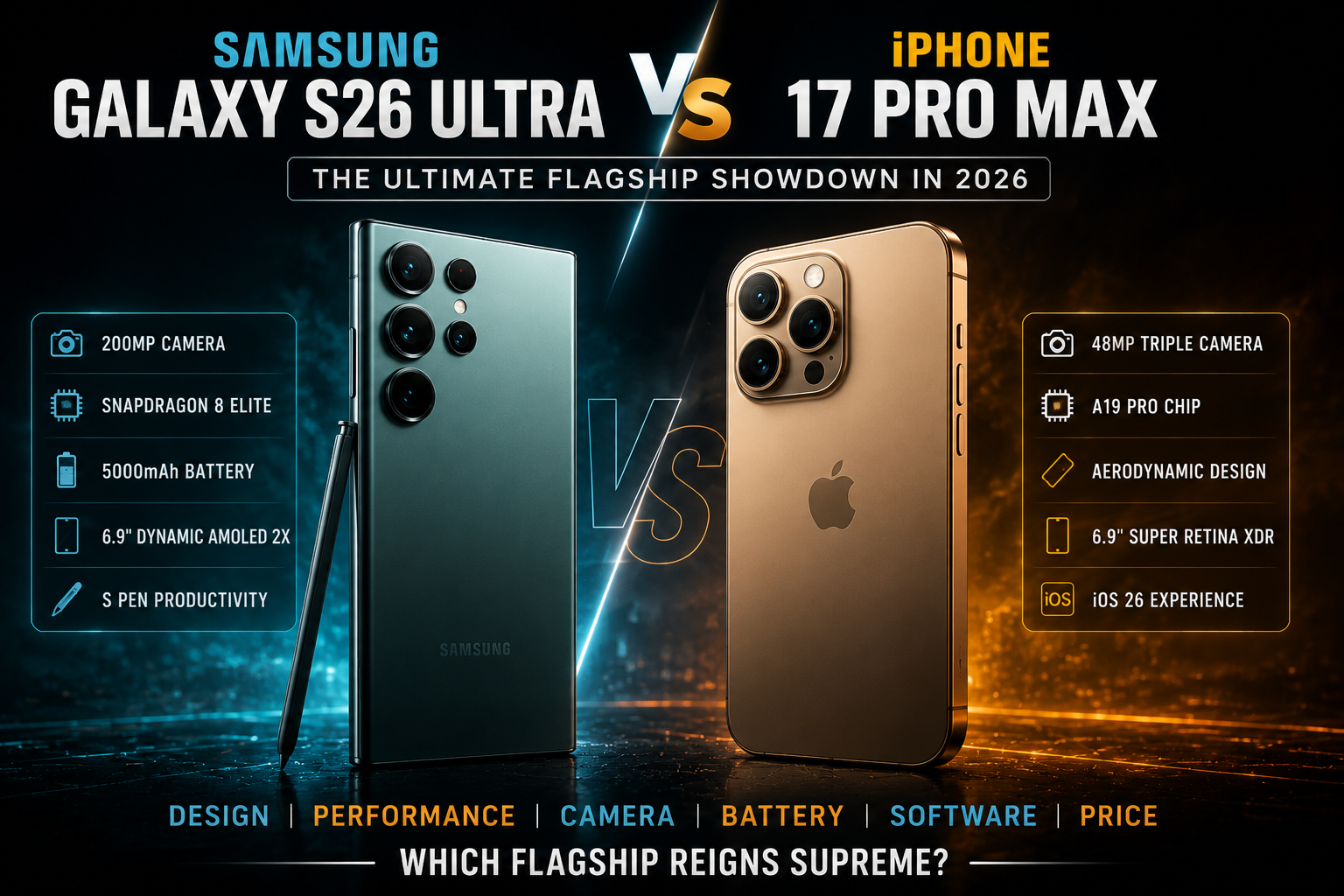
Xiaomi 16 Ultra vs vivo X300 Ultra: The Ultimate Camera Phone Clash

The ultimate battle of mobile photography titans: Xiaomi 16 Ultra meets the vivo X300 Ultra. Dive into our rigorous comparison covering Leica vs. ZEISS optics, Snapdragon processor grunt, battery capacities, and display brilliance.

Xiaomi 16 Ultra vs vivo X300 Ultra: The Ultimate Camera Phone Clash

The upper echelon of smartphone engineering has reached an extraordinary frontier, where mobile devices no longer just rival traditional cameras—they frequently surpass them in computational adaptability and instant-share convenience. At the absolute bleeding edge of this innovation sit two titans: the Xiaomi 16 Ultra and the vivo X300 Ultra. Both devices represent the pinnacle of what modern engineering can cram into a pocket-sized chassis, featuring massive camera islands, cutting-edge chipsets, and lavish displays.

If you are trying to decide which ultra-premium flagship claims the crown for mobile supremacy, this comprehensive head-to-head breakdown examines every critical metric, from processor performance to optical prowess.

1. Design Aesthetics and Hand-Feel

Luxury flagships demand a commanding presence, and both manufacturers lean into sophisticated, camera-centric industrial designs:

    Xiaomi 16 Ultra: Features a sweeping, textured vegan leather or premium ceramic rear finish anchored by a signature circular camera housing reminiscent of classic Leica rangefinders. It carries a robust IP69 dust and water resistance rating, offering top-tier physical resilience.

    vivo X300 Ultra: Adopts a professional camera-esque aesthetic with brushed metal frames, striking colorways like Eclipse Black and Victory Green, and a prominent optical glass module tuned with ZEISS branding. It matches its rival with a dual IP68/IP69 rating for complete peace of mind.

Both devices are unapologetically large and heavy due to their massive internal sensor arrays, but they project an unmistakable aura of luxury and high-end craftsmanship.


2. Display Excellence: Brightness and Panels

Immersive media consumption and precise photo editing require color-accurate, hyper-bright panels, and neither brand holds back:

    Xiaomi 16 Ultra: Equipped with a gorgeous 6.85-inch LTPO AMOLED display running at a 1440 x 3200 resolution. It features an adaptive 120Hz refresh rate and an astonishing peak brightness ceiling hitting up to 5000 nits, ensuring flawless outdoor legibility.

    vivo X300 Ultra: Sports a comparable 6.82-inch AMOLED display with a 1440 x 3168 resolution, pushing an even smoother 144Hz refresh rate for fluid UI interactions and high-framerate gaming. Color reproduction out of the box is masterfully calibrated for professional creators.

While Xiaomi wins slightly on peak outdoor brightness potential, vivo counters with a slightly faster 144Hz refresh rate profile.


3. Performance and Processing Muscle

Under the hood, these devices house elite-tier silicon designed to process heavy 4K/8K video feeds and complex computational photography algorithms instantaneously:

    Xiaomi 16 Ultra: Powered by Qualcomm's high-performance Snapdragon 8 Elite 2 architecture paired with up to 16GB of LPDDR5X RAM and UFS storage. Running on HyperOS, it provides blistering multitasking speeds and optimized thermal management.

    vivo X300 Ultra: Driven by the advanced Snapdragon 8 Elite Gen 5 processor coupled with up to 16GB of RAM and OriginOS. It breezes through extreme benchmarks and handles graphics-heavy 3D gaming effortlessly while maintaining remarkable energy efficiency.

In day-to-day operations, performance is virtually neck-and-neck, representing the absolute peak of mobile computing power available on the market.


4. The Ultimate Camera Showdown: Leica vs. ZEISS

This is the core battleground for both devices. Photography enthusiasts will find distinct philosophies in how these imaging monsters capture the world:

    Xiaomi 16 Ultra Optics: Features a ferocious quad-camera setup highlighted by a massive 50MP main sensor and a staggering 200MP periscope telephoto lens. Tuned with Leica Authentic and Vibrant color profiles, it excels at dramatic contrast, fine distant detail recovery, and cinematic portrait depth.

    vivo X300 Ultra Optics: Deploys a versatile ZEISS-optimized triple camera system featuring a 200MP primary sensor, a 50MP ultra-wide unit, and a monstrous secondary 200MP periscope telephoto configuration. Vivo leans heavily into multi-focal video capabilities and true-to-life ZEISS color science with T* lens coatings.

If you prefer punchier, highly artistic Leica aesthetics with extreme periscope reach, Xiaomi delivers. If your focus is cinematic video production, multi-focal versatility, and natural ZEISS optical precision, vivo takes a narrow advantage.


5. Battery Endurance and Charging Speeds

Powering these giant screens and advanced camera arrays requires robust energy solutions:

    Xiaomi 16 Ultra: Packs a large 6000mAh battery supported by blistering 120W wired charging and rapid 90W wireless charging capabilities.

    vivo X300 Ultra: Integrates an even larger Silicon-Carbon 6600mAh battery paired with 100W wired and 40W wireless charging speeds.

Vivo wins the raw endurance category with its higher capacity cell, whereas Xiaomi claims the crown for absolute fastest wired and wireless replenishment speeds.


Final Verdict

The choice between the Xiaomi 16 Ultra and the vivo X300 Ultra comes down to ecosystem preferences and specific creative workflow needs:

    Choose the Xiaomi 16 Ultra if you value ultra-fast charging specs, a blindingly bright display, and iconic Leica contrast-heavy photography.

    Choose the vivo X300 Ultra if you prioritize extended battery endurance, professional-grade multi-focal video tools, and authentic ZEISS optical precision.

Quick Summary

The ultimate battle of mobile photography titans: Xiaomi 16 Ultra meets the vivo X300 Ultra. Dive into our rigorous comparison covering Leica vs. ZEISS optics, Snapdragon processor grunt, battery capacities, and display brilliance.

Key Takeaways

  • The ultimate battle of mobile photography titans: Xiaomi 16 Ultra meets the vivo X300 Ultra.
  • Dive into our rigorous comparison covering Leica vs.
  • ZEISS optics, Snapdragon processor grunt, battery capacities, and display brilliance.

Quick Facts

Category: Technology
Published: July 26, 2026
Updated: October 5, 2026
Reading time: 4 min
37 views
Updated Oct 5, 2026 4 min read

Related Articles

View all
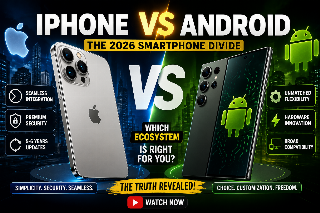
The 2026 Smartphone Divide: iPhone vs. Android Technology
Article Technology

The 2026 Smartphone Divide: iPhone vs. Android

As we move through 2026, the long-standing rivalry between iOS and Android has evolved. While both platforms are more capable and secure than ever, they serve fundamentally different philosophies: Apple’s curated ecosystem versus Android’s open-source flexibility.

Orwell, George 9 min 293

Mixed Content

Technology
Article Technology

The Post-Automation Economy: Architecting Human Skill Premiums in the Age of Autonomy

The rapid proliferation of agentic workflows and large action models is structurally inverting the traditional corporate skill pyramid. While routine analytical processes and information retrieval tasks are being automated into low-cost utility, uncommoditizable human traits—emotional intelligence, strategic ambiguity management, and ethical governance—are commanding an unprecedented value premium. Succeeding in the post-automation enterprise requires re-engineering workforce development to focu

Mutwassim 3 min 72
The Decline of Friction: Inside the FinTech Revolution in Cross-Border Settlement and Digital Identity Technology
Article Technology

The Decline of Friction: Inside the FinTech Revolution in Cross-Border Settlement and Digital Identity

The traditional plumbing of global finance—characterized by multi-day delays, hidden fees, and fragmented identity silo—is undergoing a profound transformation. A new generation of FinTech architectures, combining distributed ledger technology (DLT), synchronized liquidity pools, and decentralized digital passports, is enabling cross-border instant payments with near-zero friction.

Mutwassim 1 min 44
The City as a Switch: Architecting IoT Logistics for the Post-Congestion Urban Era Technology
Article Technology

The City as a Switch: Architecting IoT Logistics for the Post-Congestion Urban Era

The traditional model of urban delivery—reliant on high-emission diesel vans navigating static street grids—is creating unsustainable levels of congestion and pollution in global metros. To reclaim urban space, cities are transitioning to IoT-orchestrated logistics. This data-driven framework utilizes autonomous delivery swarms, automated micro-fulfillment centers, and dynamic digital kerb-side management to route goods with the efficiency of internet packets, transforming static streets into fl

Mutwassim 4 min 71
Beyond the Coffee Shop: How Cross-Border Employment and Sovereign Visas Are Institutionalizing Remote Work Technology
Article Technology

Beyond the Coffee Shop: How Cross-Border Employment and Sovereign Visas Are Institutionalizing Remote Work

Remote work is transitioning from an informal perk into an institutionalized pillar of international commerce. Over 60 nations have launched dedicated digital nomad visa regimes, while multi-jurisdictional compliance platforms and Employer of Record (EOR) frameworks dismantle traditional geographic barriers. As knowledge workers disperse globally, enterprises and municipal governments are formalizing policies around tax residency, permanent establishment risk, and asynchronous operational workfl

Mutwassim 3 min 71
The Death of Syntax: Inside the Shift to Intent-Driven Software Engineering Technology
Article Technology

The Death of Syntax: Inside the Shift to Intent-Driven Software Engineering

The day-to-day discipline of software engineering is undergoing its most radical abstraction leap since the transition from assembly language to high-level compilers. Generative code synthesis and deterministic reasoning engines are automating boilerplate syntax, turning software developers into systems architects. Survival in this new paradigm demands mastering intent formalization, specification design, and continuous verification.

Mutwassim 3 min 71
The Post-Visual Threat: Architecting Zero-Trust Defense Against Weaponized Deepfakes Technology
Article Technology

The Post-Visual Threat: Architecting Zero-Trust Defense Against Weaponized Deepfakes

The rapid weaponization of real-time voice cloning and synthetic video generation has transformed social engineering from opportunistic phishing into targeted executive identity emulation. High-profile incidents involving multi-million-dollar wire transfers authorized via synthetic video calls prove that sight and sound can no longer authenticate authorization. Securing modern enterprises requires an uncompromising zero-trust identity layer capable of neutralizing synthetic deception.

Mutwassim 3 min 139
Beyond the Battery: How Electric Mobility Is Forcing a Overhaul of the Global Power Grid Technology
Article Technology

Beyond the Battery: How Electric Mobility Is Forcing a Overhaul of the Global Power Grid

The global transition toward electric vehicles is no longer constrained primarily by battery chemistry or vehicle range. Instead, the real bottleneck has shifted directly to the electrical grid. As commercial fleets and passenger cars electrify at scale, utilities and city planners are racing to deploy vehicle-to-grid (V2G) bidirectional systems, AI-driven dynamic load balancers, and decentralized microgrid storage to avoid grid failure.

Mutwassim 3 min 58
Cloud 3.0: The Shift Toward Sovereign Data Architectures and Edge Computing Technology
Article Technology

Cloud 3.0: The Shift Toward Sovereign Data Architectures and Edge Computing

The architectural assumption that enterprise compute and storage should reside in a handful of centralized hyperscaler data centers is fracturing. Driven by strict cross-border data sovereignty regulations and the demand for millisecond-latency AI inference, global IT leaders are pivoting to Cloud 3.0—a model centered on distributed, locally governed, and hybrid sovereign architectures.

Mutwassim 3 min 61