






5 Upcoming Smartphones Worth Waiting For (Late 2026 & Early 2027)

Planning your next smartphone upgrade? Don't buy just yet. From the 2nm iPhone 18 and TSMC-powered Pixel 11 to the groundbreaking periscope zoom on the OnePlus 14, here are 5 upcoming flagships worth waiting for.

5 Upcoming Smartphones Worth Waiting For (Late 2026 & Early 2027)

The tech industry moves at a blistering pace, and while the current crop of flagship smartphones is undoubtedly impressive, the real game-changers are already taking shape in manufacturer R&D labs. Mobile technology is approaching a major inflection point, driven by 2nm chipset nodes, invisible under-display sensors, zero-crease foldable displays, and custom periscope telephoto optics.

If you are planning your next major upgrade, holding off just a little bit longer might be the smartest move you can make. From revolutionary foldables to next-generation AI powerhouses, here are 5 upcoming smartphones worth waiting for as we head into late 2026 and early 2027.


1. iPhone 18 Series: Apple's 2nm Power Shift

Every new iPhone generates headline buzz, but the upcoming iPhone 18 line (expected in September 2026) marks one of the biggest architectural shifts in Apple silicon history. Powered by the all-new A20 Pro chip built on TSMC’s cutting-edge 2nm process, the iPhone 18 Pro is engineered around extreme thermal efficiency and dedicated on-device AI computation.

Why It Is Worth Waiting For:

  • 8K Cinema-Grade Video: Rumors strongly indicate support for 8K video capture at 60fps, unlocking unprecedented resolution for mobile filmmakers.
  • 48MP Ultrawide Camera: Apple is bringing 48-megapixel resolution to its ultrawide lens, giving all primary rear sensors matched clarity for spatial video and dynamic low-light photography.
  • Refined Aesthetics: Expect a narrower island footprint as Apple prepares its roadmap for future under-display Face ID integration.

2. Google Pixel 11: Thermal Efficiency & TSMC Silicon

Google's Pixel line has long dominated mobile computational photography and software intelligence, but hardware efficiency was historically a compromise. That narrative changes completely with the Pixel 11 and its new Tensor G6 chip (codenamed Malibu).

Why It Is Worth Waiting For:

  • Built on TSMC 2nm Process: Moving away from prior manufacturing nodes, the Tensor G6 focuses heavily on sustained performance, vastly improved battery life, and zero thermal throttling during extended use.
  • MediaTek Cellular Modem: Pixel users rejoice: Google is finally ditching legacy modems for a MediaTek cellular chip, ending years of signal drain and connectivity drops.
  • Next-Gen On-Device Gemini TPU: Paired with the new Santafe TPU and Metis ISP, the Pixel 11 brings instant, offline generative AI features right to your palm.

3. Samsung Galaxy Z Fold 8: The Zero-Crease Benchmark

Samsung continues to refine its foldable ecosystem, and the Galaxy Z Fold 8 brings substantial upgrades aimed at erasing the compromises of early folding phones. Featuring the flagship Snapdragon 8 Elite Gen 5 processor, Samsung's newest foldable targets power users who want desktop-class performance in a pocketable device.

Why It Is Worth Waiting For:

  • Flex Titanium Hinge: A revolutionary micro-patterned titanium support structure reduces the display crease depth to near invisibility while improving drop durability.
  • Pro-Grade 200MP Main Camera: Borrowing technology from Samsung’s Ultra lineup, the Fold 8 features a massive 200MP main camera with APV codec 8K recording and enhanced Nightography.
  • Massive 5,000 mAh Battery: A 14% boost in battery capacity paired with 45W dual-path charging provides all-day endurance for multi-window productivity.

4. OnePlus 14: The Periscope Zoom Revolution

OnePlus has built a reputation on sheer speed, rapid charging, and aggressive pricing. However, camera versatility—specifically long-range zoom—was one area where rivals held an edge. The upcoming OnePlus 14 is set to rectify this with a historic hardware first for the brand.

Why It Is Worth Waiting For:

  • First-Ever Periscope Telephoto Lens: The OnePlus 14 is rumored to feature a high-resolution 50MP periscope telephoto lens with up to 5x optical zoom and advanced periscope prism stabilization.
  • Silicon-Carbon Battery Breakthrough: Expected to pack a massive ~6,500 mAh to 7,000 mAh battery cell using high-density silicon-carbon technology without increasing phone thickness.
  • Snapdragon 8 Elite Powerhouse: Paired with up to 24GB of RAM and custom cooling architecture for unthrottled mobile gaming.

5. Oppo Find N6: The Ultra-Slim Foldable King

Oppo has quietly become one of the most innovative hardware manufacturers in the world, particularly in the foldable segment. The Oppo Find N6 builds upon the acclaimed Find N series, introducing a refined passport aspect ratio that feels like a natural phone when closed and an expansive mini-tablet when open.

Why It Is Worth Waiting For:

  • Ultra-Slim Profile: Measuring under 4.5mm thin when unfolded, the Find N6 sets a new record for lightweight, ergonomic foldable engineering.
  • Hasselblad Color Calibration: Powered by a triple 50MP rear camera cluster tuned by Hasselblad, delivering industry-leading skin tones, dynamic range, and color accuracy.
  • Zero-Feel Crease Technology: Combined with an 8.12-inch 120Hz LTPO OLED display, the inner screen is almost completely flat from edge to edge.

Final Thoughts: Which One Should You Wait For?

If photography and sleek iOS ecosystem longevity are your top priorities, holding out for the iPhone 18 or Pixel 11 will yield massive returns. However, if you are eager to embrace the future of multitasking and flexible displays, both the Galaxy Z Fold 8 and Oppo Find N6 prove that foldables have officially reached prime time maturity. No matter which device catches your eye, patient buyers in late 2026 and early 2027 will be rewarded with some of the most dramatic hardware jumps in recent tech history.

Quick Summary

Planning your next smartphone upgrade? Don't buy just yet. From the 2nm iPhone 18 and TSMC-powered Pixel 11 to the groundbreaking periscope zoom on the OnePlus 14, here are 5 upcoming flagships worth waiting for.

Key Takeaways

  • 8K Cinema-Grade Video: Rumors strongly indicate support for 8K video capture at 60fps, unlocking unprecedented resolution for mobile filmmakers.
  • 48MP Ultrawide Camera: Apple is bringing 48-megapixel resolution to its ultrawide lens, giving all primary rear sensors matched clarity for spatial video and dynamic low-light photography.
  • Refined Aesthetics: Expect a narrower island footprint as Apple prepares its roadmap for future under-display Face ID integration.
  • Built on TSMC 2nm Process: Moving away from prior manufacturing nodes, the Tensor G6 focuses heavily on sustained performance, vastly improved battery life, and zero thermal throttling during extended use.
  • MediaTek Cellular Modem: Pixel users rejoice: Google is finally ditching legacy modems for a MediaTek cellular chip, ending years of signal drain and connectivity drops.

Quick Facts

Category: Technology
Published: July 31, 2026
Updated: October 7, 2026
Reading time: 5 min
55 views
Updated Oct 7, 2026 5 min read

Related Articles

View all
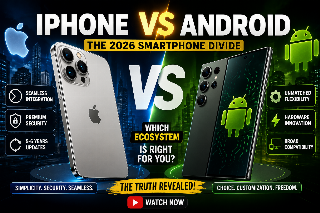
The 2026 Smartphone Divide: iPhone vs. Android Technology
Article Technology

The 2026 Smartphone Divide: iPhone vs. Android

As we move through 2026, the long-standing rivalry between iOS and Android has evolved. While both platforms are more capable and secure than ever, they serve fundamentally different philosophies: Apple’s curated ecosystem versus Android’s open-source flexibility.

Orwell, George 9 min 293

Mixed Content

Technology
Article Technology

The Post-Automation Economy: Architecting Human Skill Premiums in the Age of Autonomy

The rapid proliferation of agentic workflows and large action models is structurally inverting the traditional corporate skill pyramid. While routine analytical processes and information retrieval tasks are being automated into low-cost utility, uncommoditizable human traits—emotional intelligence, strategic ambiguity management, and ethical governance—are commanding an unprecedented value premium. Succeeding in the post-automation enterprise requires re-engineering workforce development to focu

Mutwassim 3 min 72
The Decline of Friction: Inside the FinTech Revolution in Cross-Border Settlement and Digital Identity Technology
Article Technology

The Decline of Friction: Inside the FinTech Revolution in Cross-Border Settlement and Digital Identity

The traditional plumbing of global finance—characterized by multi-day delays, hidden fees, and fragmented identity silo—is undergoing a profound transformation. A new generation of FinTech architectures, combining distributed ledger technology (DLT), synchronized liquidity pools, and decentralized digital passports, is enabling cross-border instant payments with near-zero friction.

Mutwassim 1 min 44
The City as a Switch: Architecting IoT Logistics for the Post-Congestion Urban Era Technology
Article Technology

The City as a Switch: Architecting IoT Logistics for the Post-Congestion Urban Era

The traditional model of urban delivery—reliant on high-emission diesel vans navigating static street grids—is creating unsustainable levels of congestion and pollution in global metros. To reclaim urban space, cities are transitioning to IoT-orchestrated logistics. This data-driven framework utilizes autonomous delivery swarms, automated micro-fulfillment centers, and dynamic digital kerb-side management to route goods with the efficiency of internet packets, transforming static streets into fl

Mutwassim 4 min 71
Beyond the Coffee Shop: How Cross-Border Employment and Sovereign Visas Are Institutionalizing Remote Work Technology
Article Technology

Beyond the Coffee Shop: How Cross-Border Employment and Sovereign Visas Are Institutionalizing Remote Work

Remote work is transitioning from an informal perk into an institutionalized pillar of international commerce. Over 60 nations have launched dedicated digital nomad visa regimes, while multi-jurisdictional compliance platforms and Employer of Record (EOR) frameworks dismantle traditional geographic barriers. As knowledge workers disperse globally, enterprises and municipal governments are formalizing policies around tax residency, permanent establishment risk, and asynchronous operational workfl

Mutwassim 3 min 71
The Death of Syntax: Inside the Shift to Intent-Driven Software Engineering Technology
Article Technology

The Death of Syntax: Inside the Shift to Intent-Driven Software Engineering

The day-to-day discipline of software engineering is undergoing its most radical abstraction leap since the transition from assembly language to high-level compilers. Generative code synthesis and deterministic reasoning engines are automating boilerplate syntax, turning software developers into systems architects. Survival in this new paradigm demands mastering intent formalization, specification design, and continuous verification.

Mutwassim 3 min 71
The Post-Visual Threat: Architecting Zero-Trust Defense Against Weaponized Deepfakes Technology
Article Technology

The Post-Visual Threat: Architecting Zero-Trust Defense Against Weaponized Deepfakes

The rapid weaponization of real-time voice cloning and synthetic video generation has transformed social engineering from opportunistic phishing into targeted executive identity emulation. High-profile incidents involving multi-million-dollar wire transfers authorized via synthetic video calls prove that sight and sound can no longer authenticate authorization. Securing modern enterprises requires an uncompromising zero-trust identity layer capable of neutralizing synthetic deception.

Mutwassim 3 min 139
Beyond the Battery: How Electric Mobility Is Forcing a Overhaul of the Global Power Grid Technology
Article Technology

Beyond the Battery: How Electric Mobility Is Forcing a Overhaul of the Global Power Grid

The global transition toward electric vehicles is no longer constrained primarily by battery chemistry or vehicle range. Instead, the real bottleneck has shifted directly to the electrical grid. As commercial fleets and passenger cars electrify at scale, utilities and city planners are racing to deploy vehicle-to-grid (V2G) bidirectional systems, AI-driven dynamic load balancers, and decentralized microgrid storage to avoid grid failure.

Mutwassim 3 min 58
Cloud 3.0: The Shift Toward Sovereign Data Architectures and Edge Computing Technology
Article Technology

Cloud 3.0: The Shift Toward Sovereign Data Architectures and Edge Computing

The architectural assumption that enterprise compute and storage should reside in a handful of centralized hyperscaler data centers is fracturing. Driven by strict cross-border data sovereignty regulations and the demand for millisecond-latency AI inference, global IT leaders are pivoting to Cloud 3.0—a model centered on distributed, locally governed, and hybrid sovereign architectures.

Mutwassim 3 min 61