



The wearable technology industry is entering a transformative new chapter. For more than a decade, smartwatches have dominated the personal health and fitness market, evolving from simple notification devices into sophisticated digital companions capable of monitoring heart health, sleep quality, physical activity, and overall wellness. However, as consumer preferences continue shifting toward smaller, more discreet devices, the next generation of wearable technology is moving beyond the wrist. Smart rings are emerging as one of the fastest-growing product categories, combining powerful health tracking with elegant, minimalist design that users can comfortably wear throughout the day and night.
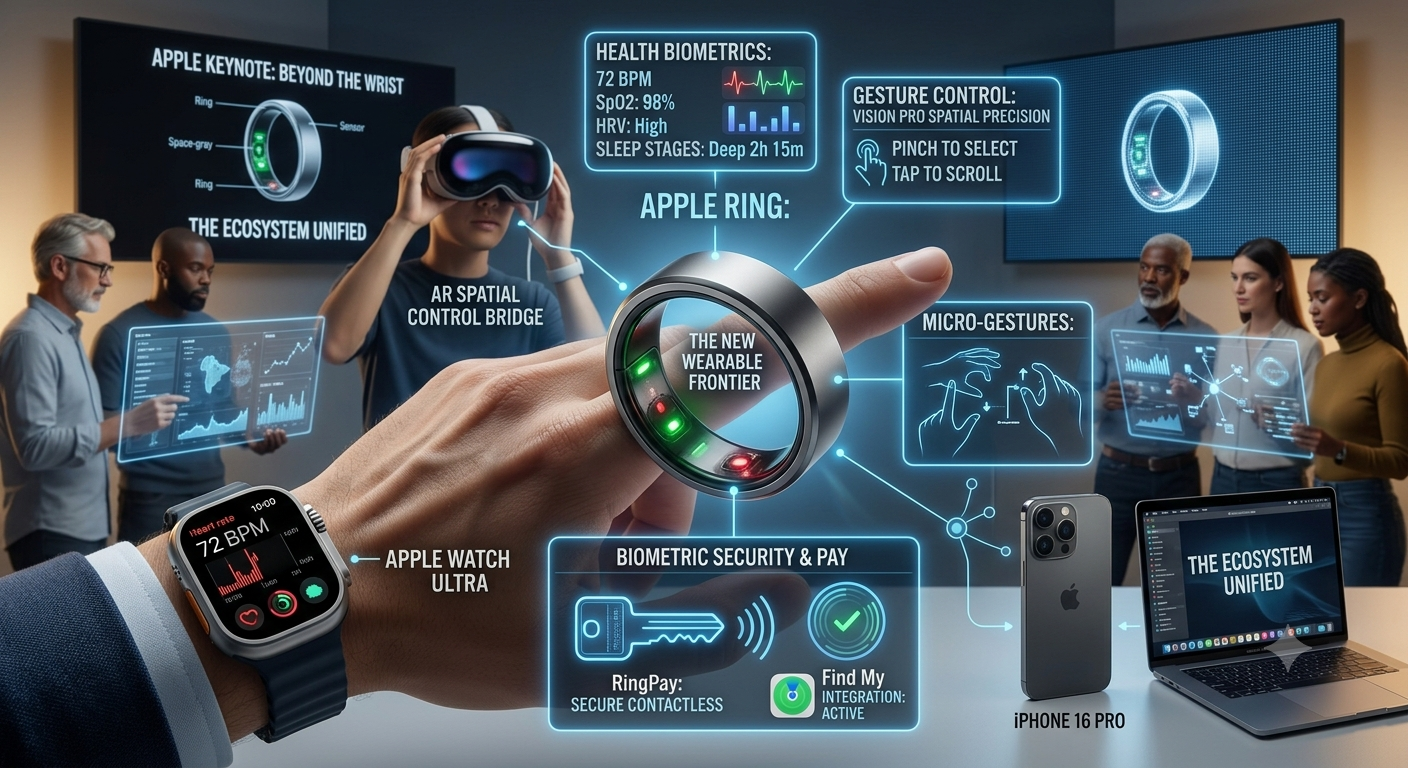
In this future scenario, Apple expands its wearable ecosystem by introducing the Apple Ring, a compact health-focused device designed for users who prefer a screen-free experience without sacrificing advanced functionality. Rather than replacing existing wearables entirely, the smart ring complements smartphones, smartwatches, and mixed-reality devices by providing continuous health monitoring in an almost invisible form factor. Built using lightweight aerospace-grade titanium, the ring reflects Apple’s long-standing design philosophy of combining premium materials, powerful technology, and seamless ecosystem integration into a single product.
Despite its remarkably small size, the Apple Ring is envisioned as housing an impressive collection of advanced biometric sensors capable of continuously monitoring the wearer’s health. Modern sensor technology has advanced to the point where miniature devices can accurately measure heart rate, blood oxygen saturation, skin temperature, heart rate variability (HRV), respiratory patterns, and stress levels without requiring bulky hardware. By collecting health data continuously throughout the day, the device could generate a more complete picture of overall wellness than occasional measurements alone.
One of the most valuable applications of smart ring technology lies in sleep monitoring. Unlike traditional smartwatches, which some users find uncomfortable to wear overnight, a lightweight ring can remain virtually unnoticed during sleep. By analyzing movement patterns, body temperature fluctuations, heart rate variability, and blood oxygen levels, the device could provide detailed insights into sleep quality, sleep stages, nighttime recovery, and overall restfulness. Future software may even identify early indicators of sleep disorders, encouraging users to seek professional medical advice before symptoms become more serious.
Fitness tracking also evolves significantly within this concept. Rather than simply counting steps or calories burned, the ring continuously evaluates how the body responds to physical activity and recovery. Using advanced algorithms, it could generate personalized readiness scores that help users determine whether their bodies are fully recovered for intense exercise or would benefit from additional rest. Such personalized recommendations reduce the likelihood of overtraining while helping athletes optimize performance based on real physiological data instead of guesswork.
Stress management represents another major focus for next-generation wearables. Modern lifestyles often involve constant work demands, digital notifications, and irregular sleep schedules, all of which contribute to elevated stress levels. By monitoring subtle changes in heart rate variability and other physiological indicators, smart rings could detect periods of increased stress before users consciously recognize them. The device could then recommend breathing exercises, short mindfulness sessions, or temporary reductions in activity to promote better mental well-being throughout the day.
Beyond health monitoring, future smart rings could fundamentally change how people interact with digital devices. Advances in motion sensors, gyroscopes, accelerometers, and touch-sensitive surfaces make it possible to recognize precise finger gestures without requiring physical contact with a screen. Simple hand movements—such as pinching two fingers together, rotating the wrist, or tapping the thumb against another finger—could become intuitive methods for controlling connected devices. These gesture-based interfaces create a more natural interaction model while reducing dependence on traditional keyboards, mice, and touchscreens.
This capability becomes particularly powerful when paired with augmented reality and mixed reality technologies. As immersive computing platforms continue developing, users increasingly need lightweight input methods that feel natural within three-dimensional digital environments. A smart ring equipped with highly accurate motion tracking could function as a precision controller for selecting virtual objects, navigating digital workspaces, drawing in three-dimensional environments, or interacting with holographic applications. Such technology would significantly enhance productivity and user comfort compared to handheld controllers.
The broader smart home ecosystem also benefits from deeper wearable integration. Future smart rings may act as secure digital keys capable of authenticating users automatically as they approach their homes, vehicles, or workplaces. Instead of reaching for physical keys or entering passwords, users could unlock doors, start vehicles, or access personal computers through encrypted short-range wireless communication. These interactions would occur seamlessly in the background while maintaining strong security protections through advanced authentication technologies.
Financial transactions represent another area where wearable technology continues expanding. Building upon today’s contactless payment systems, future smart rings could incorporate highly secure NFC technology alongside dedicated security processors that protect sensitive payment information. A simple tap at compatible payment terminals would enable fast, secure purchases without requiring a smartphone or wallet. Multiple layers of biometric authentication and encrypted communication would help ensure transactions remain protected against unauthorized access.
Privacy and data security are becoming increasingly important as wearable devices collect more personal information. Future smart rings would likely prioritize on-device data processing wherever possible, minimizing the amount of sensitive biometric information transmitted to external cloud servers. Secure hardware modules, end-to-end encryption, and user-controlled privacy settings could allow individuals to decide exactly how their health data is stored, analyzed, and shared. Maintaining public trust will be essential as wearable technology becomes more deeply integrated into everyday life.
Battery technology also plays a critical role in the success of compact wearables. Advances in low-power processors, energy-efficient sensors, and optimized software could enable smart rings to operate continuously for several days on a single charge despite their extremely small physical size. Wireless charging cases similar to those used for modern wireless earbuds may provide convenient charging while ensuring users rarely experience interruptions in continuous health monitoring.
The growing popularity of smart rings also reflects broader consumer trends favoring minimalist technology. Many users appreciate receiving the benefits of advanced health tracking without constantly viewing notifications or interacting with screens. Instead of demanding attention, future wearable devices are increasingly designed to operate quietly in the background, collecting meaningful insights while allowing users to remain focused on their daily activities. This philosophy supports healthier relationships with technology by reducing unnecessary digital distractions.
Competition within the wearable industry is expected to accelerate significantly as more manufacturers invest in miniature health devices. Companies are exploring increasingly sophisticated sensors capable of monitoring hydration levels, blood pressure trends, blood glucose indicators, body composition, and other health metrics that could transform preventive healthcare. While many of these capabilities remain under development, ongoing advances in biomedical engineering suggest that wearable technology will continue expanding well beyond traditional fitness tracking.
Healthcare professionals are also recognizing the long-term potential of continuous biometric monitoring. Rather than relying solely on occasional clinical visits, physicians may increasingly incorporate wearable-generated health data into routine medical assessments. Continuous monitoring enables earlier detection of abnormalities, more personalized treatment plans, and improved management of chronic conditions. As regulatory standards evolve and sensor accuracy improves, wearable devices may become valuable tools supporting preventive medicine worldwide.
Ultimately, the future of wearable technology extends far beyond simply replacing the smartwatch. Smart rings represent a broader shift toward invisible computing—technology that integrates naturally into daily life while providing meaningful assistance without constant user interaction. By combining advanced health monitoring, intuitive gesture controls, secure authentication, and seamless connectivity within an elegant form factor, devices like the Apple Ring illustrate how the next generation of personal technology may become less visible, yet more deeply integrated into every aspect of modern living. As wearable innovation continues accelerating, the most successful products will be those that quietly enhance human health, productivity, and convenience while remaining almost invisible to the people wearing them.