





The Rise of the Human-Centered Workplace
For decades, workplace productivity was largely measured by output.
How many tasks could be completed? How quickly could processes be repeated? How efficiently could employees handle increasing workloads?
But the rapid advancement of artificial intelligence and automation is changing that equation.
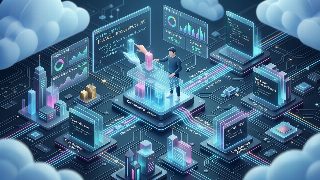
Algorithms can now analyze enormous datasets, generate drafts, automate administrative processes, and perform many routine tasks in seconds.
As technology takes over more repetitive execution, organizations are being forced to reconsider what human contribution truly means.
This shift is giving rise to the human-centered workplace—an organizational model designed around creativity, critical thinking, collaboration, adaptability, and sustainable employee performance.
From Technical Tasks to Core Human Skills
When software can automate coding assistance, analyze spreadsheets, generate content, and respond to routine customer inquiries, traditional definitions of professional value begin to change.
Technical expertise remains important, but long-term career resilience increasingly depends on capabilities that are difficult to automate.
Complex Problem-Solving and Adaptability
The modern workplace is changing rapidly.
Employees must increasingly navigate ambiguous situations, make decisions with incomplete information, and adapt as technology reshapes established workflows.
The ability to learn continuously and adjust strategies may become just as important as mastering a specific technical skill.
Emotional Intelligence and Empathy
Technology can process information, but human relationships remain essential.
Leaders must motivate teams, manage conflict, communicate across departments, and build trust.
These skills are especially important as organizations operate across hybrid and remote environments, where maintaining connection and psychological safety requires deliberate effort.
Creative Vision
Artificial intelligence can generate ideas and identify patterns, but meaningful innovation often requires human judgment and context.
Creative professionals are increasingly focused on defining the right problems, developing original concepts, and understanding cultural and emotional nuances that cannot always be captured by data alone.
The most successful organizations may therefore use AI as a creative partner while keeping human judgment at the center of strategic decision-making.
The Hidden Cost of Hyper-Efficiency
There is an unexpected paradox at the heart of workplace automation.
Technology is designed to make work more efficient, yet greater efficiency does not always result in less stress.
In some organizations, faster tools have created expectations for faster responses.
Employees may feel pressure to remain constantly available, respond immediately to messages, and produce more simply because technology makes it possible.
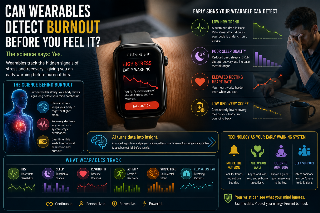
The result can be cognitive overload and burnout.
This has forced organizations to reconsider an important question:
If technology can help people work faster, should the goal always be to make them work more?
Increasingly, the answer is no.
Building a Healthier Workplace Culture
Forward-thinking organizations are beginning to treat employee well-being as an essential part of business strategy rather than an optional benefit.
Approaches may include:
- Asynchronous communication policies.
- Protected periods without meetings.
- Clear expectations around after-hours communication.
- Flexible working arrangements.
- Opportunities for continuous learning.
- Access to meaningful mental health and well-being support.
- Workflows designed to reduce unnecessary digital interruptions.
The goal is not simply to make employees more comfortable.
It is to build organizations capable of sustaining high performance over the long term.
Human energy is not unlimited. Organizations that recognize this may be better positioned to retain talent, maintain creativity, and navigate periods of rapid change.
The Balanced Enterprise
The future of work is unlikely to be a simple competition between humans and machines.
Instead, the most successful organizations may be those that understand how to combine the strengths of both.
Automation can handle repetitive processes, analyze information, and accelerate execution.
People can provide judgment, empathy, creativity, leadership, and strategic vision.
The challenge for businesses is to design systems in which technology amplifies human potential rather than simply increasing the volume of work.
Conclusion
The rise of AI and automation is forcing organizations to rethink what productivity really means.
In the human-centered workplace, success is not measured solely by how much work gets completed. It is also measured by the quality of ideas, the resilience of teams, the strength of relationships, and the ability of employees to continue learning and adapting.
Companies that invest in both advanced technology and human development will be better equipped to navigate an increasingly unpredictable economy.
The future of work is not about replacing people with machines.
It is about using machines to give people more opportunities to do the work that matters most.