





The biggest FIFA World Cup in history is now producing numbers football has never seen before.
Stadiums are packed.
Fan zones are attracting millions.
Digital audiences are following the tournament around the world.
And before the competition has even reached its conclusion, the 2026 FIFA World Cup has already rewritten several major records.
The first 48-team edition was always expected to be bigger.
Few could have predicted just how enormous the tournament would become.
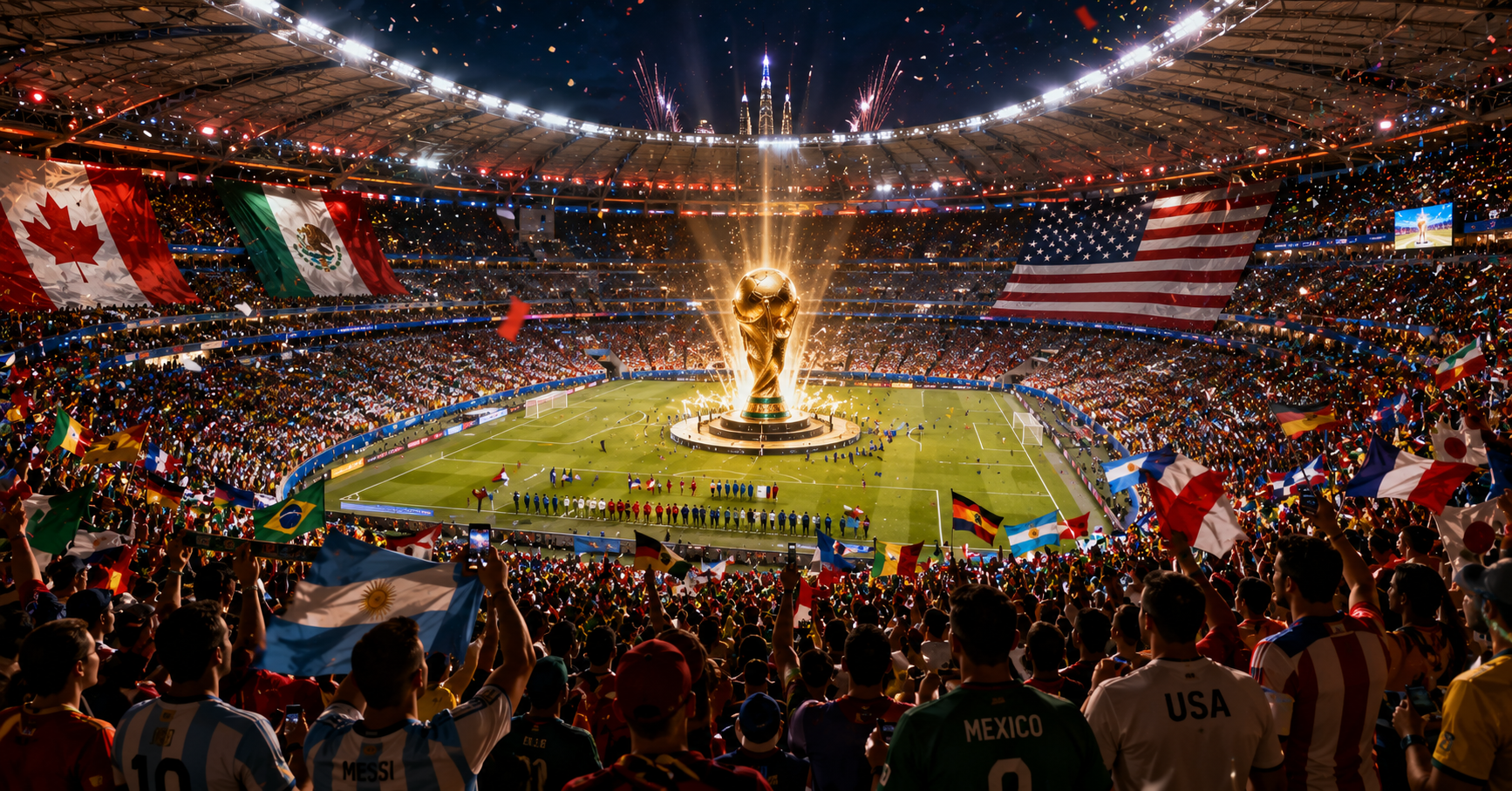
FIFA says the competition has already set unprecedented attendance and fan engagement milestones across Canada, Mexico and the United States.
This is no longer simply a larger World Cup.
It may be the moment football entered a completely new era.
Football's Biggest Tournament Has Become Even Bigger
For decades, the men's World Cup featured 32 teams.
The 2026 tournament expanded the competition to 48 nations.
That change created more matches, more participating countries and a much larger geographical footprint.
The tournament is being staged across three host nations.
Canada.
Mexico.
The United States.
The scale is enormous.
More teams means more supporters have a direct connection to the competition.
Countries that previously struggled to qualify have received an opportunity to perform on football's biggest stage.
That expansion has helped create a tournament with an extraordinary level of global interest.
The Attendance Record Has Already Been Destroyed
The most visible evidence of the World Cup's enormous scale can be found inside the stadiums.
FIFA reported that 4.6 million supporters attended the first 72 matches of the group stage.
That total alone was already greater than the previous record for an entire World Cup.
The 1994 tournament in the United States had held the historic attendance benchmark for decades.
The 2026 edition passed it before reaching the latter stages of the competition.
That is a remarkable achievement.
The tournament later welcomed its five millionth stadium spectator, becoming the first World Cup in history to cross that milestone.
The numbers have continued to rise as the knockout rounds attract even greater attention.
More Than 50 Million People Have Now Attended World Cup Matches in History
Another historic milestone arrived during the tournament.
FIFA confirmed that combined attendance across every men's World Cup has now passed 50 million spectators.
The landmark was reached during the 2026 competition.
A crowd of 70,649 in Dallas pushed the all-time figure beyond the 50 million mark.
That number represents generations of football supporters.
Different countries.
Different eras.
Different legendary players.
From the earliest tournaments to the modern global spectacle, more than 50 million stadium visits have now been recorded across World Cup history.
Mexico City Has Produced Some of the Tournament's Biggest Crowds
Mexico's role in the competition has been particularly significant.
Mexico City Stadium has hosted some of the largest crowds of the tournament.
FIFA reported attendances of 80,824 for five matches at the venue.
Those games generated a combined attendance of more than 404,000 spectators.
The atmosphere surrounding matches in Mexico has again demonstrated the country's extraordinary relationship with football.
Mexico is also making World Cup history as a host nation.
Its place in the 2026 tournament adds another chapter to a long connection with the competition.
The packed stadiums show that the passion remains enormous.
Fan Festivals Have Become Events of Their Own
The World Cup is not only breaking records inside football stadiums.
Millions of fans are experiencing the tournament without holding a match ticket.
FIFA Fan Festivals have become a huge part of the competition.
According to FIFA, more than 7.7 million people have gathered at official Fan Festivals across the three host countries so far.
These events allow fans to watch matches on large screens while experiencing live entertainment and football-related activities.
The scale of participation is extraordinary.
For comparison, that audience is larger than the population of many countries.
The World Cup has effectively created temporary football cities filled with supporters from around the world.
The 48-Team Format Has Changed the World Cup Experience
The expansion to 48 teams was controversial before the tournament began.
Critics questioned whether adding more countries would reduce the quality of matches.
Others worried the tournament could become too long or difficult to follow.
The reality has produced a more complicated picture.
There are certainly more fixtures.
The tournament structure is larger.
But expansion has also created opportunities for countries that previously had limited World Cup experience.
Several teams have produced unexpected performances.
Underdogs have challenged established football nations.
Supporters from more countries have been able to see their national teams compete on the biggest stage.
That emotional connection is extremely valuable.
A World Cup becomes much more important to a country when its own team is involved.
Africa's Performance Shows Why Expansion Matters
African nations have provided one of the strongest examples of the tournament's wider competitive reach.
Nine of the ten African teams at the 2026 World Cup advanced beyond the group stage, according to Reuters.
Morocco reached the quarter-finals.
Egypt recorded its first World Cup match victory.
Cape Verde became one of the tournament's most popular underdog stories.
Algeria, Ghana and South Africa also progressed into the knockout rounds.
No African team ultimately reached the semi-finals, but the overall performance demonstrated the growing depth of football across the continent.
The expanded tournament gave more teams an opportunity.
Many of them proved they belonged.
The World Cup Is Creating New Football Stories
Every World Cup produces famous moments.
The larger 2026 competition has created space for even more stories.
Supporters have watched global superstars continue to chase records.
At the same time, players from less internationally recognised teams have gained enormous attention.
A country does not need to win the trophy to create a memorable World Cup campaign.
One dramatic victory can become part of national sporting history.
A goalkeeper can become a hero during a penalty shootout.
A young player can suddenly attract attention from football clubs around the world.
An underdog can capture the support of neutral fans.
The expanded format has increased the number of opportunities for those moments to happen.
Lionel Messi Is Still Rewriting World Cup History
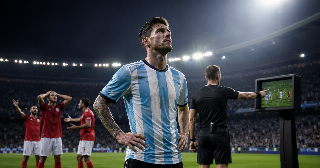
The 2026 tournament has also delivered another extraordinary chapter in Lionel Messi's career.
Messi entered his sixth World Cup and has continued to set records.
Reuters' World Cup data shows that he moved to the top of the all-time men's World Cup scoring chart during the tournament.
He reached 21 career World Cup goals, while Kylian Mbappé remained close behind.
Messi has also extended his extraordinary appearance record at the competition.
At 39, his performances have become one of the tournament's biggest global stories.
Argentina coach Lionel Scaloni has described him as a machine after Messi continued scoring for the defending champions.
A New Generation Is Chasing Football's Greatest Records
Messi's records may not remain safe forever.
Kylian Mbappé is already moving rapidly up the World Cup scoring rankings.
Erling Haaland has also emerged as a major force during the tournament.
The Golden Boot battle has become one of the most closely followed individual stories of the competition.
The presence of established legends and younger global stars has created a fascinating transition.
Football fans are watching one generation reach the final stages of extraordinary careers.
At the same time, another generation is beginning to challenge their records.
The 2026 World Cup sits directly between those two eras.
North America Is Showing the Scale of Its Football Audience
The tournament is also changing perceptions about football in North America.
The United States is traditionally associated with sports such as American football, basketball and baseball.
The World Cup has demonstrated the enormous audience available for global football.
Huge stadium crowds have attended matches.
Fan festivals have attracted massive numbers.
Television interest has grown around the performance of the host nations and international superstars.
Canada and Mexico have also played major roles in the tournament's atmosphere.
The three-country hosting structure has created a World Cup spread across an entire continent.
That presents logistical challenges.
But it has also created an enormous commercial and cultural footprint.
The Numbers Matter Beyond FIFA
Record attendance is not simply a statistic for the history books.
Major sporting events generate activity across multiple industries.
Hotels receive visitors.
Restaurants serve travelling supporters.
Airlines transport fans between cities.
Local businesses benefit from increased foot traffic.
Sponsors gain exposure.
Broadcasters attract audiences.
Host cities also gain international visibility.
The scale of the 2026 World Cup means the tournament's impact extends far beyond the football pitch.
Millions of people are travelling, spending and participating in events connected to the competition.
For host cities, the tournament is both a sporting event and a major international showcase.
Has the Expanded World Cup Already Proved Its Critics Wrong?
It may still be too early to give a final verdict on the 48-team format.
Competitive fairness and tournament structure will continue to be debated.
Researchers have already raised questions about how the expanded format handles third-placed teams and knockout bracket design.
One recent academic paper argues that the current structure creates complex bracket possibilities and potential competitive imbalances.
Those concerns should not simply be ignored because attendance is strong.
A tournament can be commercially successful while still needing structural improvements.
However, one argument has become much harder to make.
There is clearly enormous demand for a bigger World Cup.
The crowds have demonstrated that.
The millions attending fan events have demonstrated that.
The global attention has demonstrated that.
The Final Could Push the Numbers Even Higher
The tournament is not finished.
The biggest matches are still producing intense global interest.
As the competition moves towards its conclusion, stadium attendance and digital engagement will continue to grow.
The final will become one of the most watched sporting events of the year.
A new champion will be crowned.
Individual records may change again.
And FIFA will eventually publish the complete figures for the entire tournament.
The final numbers could make the existing records look even more impressive.
Football May Never Return to the Old World Cup
The 2026 tournament was an experiment on an unprecedented scale.
Forty-eight teams.
Three host countries.
Millions of stadium spectators.
Millions more inside fan festivals.
The competition has been larger, longer and more complex than previous editions.
Not every debate has been resolved.
Questions about format, scheduling and competitive balance will continue.
But the tournament has already demonstrated something important.
The global appetite for the World Cup is enormous.
Football's biggest event has expanded.
The crowds have arrived.
The records have fallen.
And after the scale of 2026, the World Cup may never feel small again.