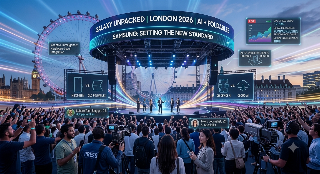



For the first time, Samsung isn't selling one book-style foldable. It's selling two. At Galaxy Unpacked in London on July 22, 2026, the company split its flagship Fold line into the Galaxy Z Fold 8 and a brand-new Galaxy Z Fold 8 Ultra, while the year-old Galaxy Z Fold 7 sticks around at a lower price. If you're trying to figure out which one actually deserves your money, here's what changed and what didn't.
Quick answer
The Fold 8 is the lighter, cheaper option built around content and everyday use, with a redesigned 4:3 unfolded screen and no telephoto camera. The Fold 8 Ultra is the true flagship — Samsung's first "Ultra" foldable — with a 200MP camera, a dedicated telephoto lens, a brighter screen, and a new Flex Titanium layer that noticeably reduces the crease. The Fold 7 is last year's model, now selling for hundreds less, and still a genuinely capable phone if you don't need the newest camera or AI features.
Price and release date
Pricing is where Samsung made its most surprising move. Instead of raising the price across the board, it pushed the entry point down and put the increase on the new Ultra tier.
- Galaxy Z Fold 7: now discounted from its original $1,999 / £1,799 launch price
- Galaxy Z Fold 8: starts at £1,699 in the UK — cheaper than the Fold 7 was at launch
- Galaxy Z Fold 8 Ultra: starts at £1,899 in the UK, roughly $1,999 in the US
Pre-orders opened the same day as the announcement, July 22, 2026, with general retail availability from August 7, 2026. That means all three phones are shopping options at the same time this year, which hasn't happened with a Fold launch before.
Display: two very different shapes
This is the biggest change, and it's not just a size bump.
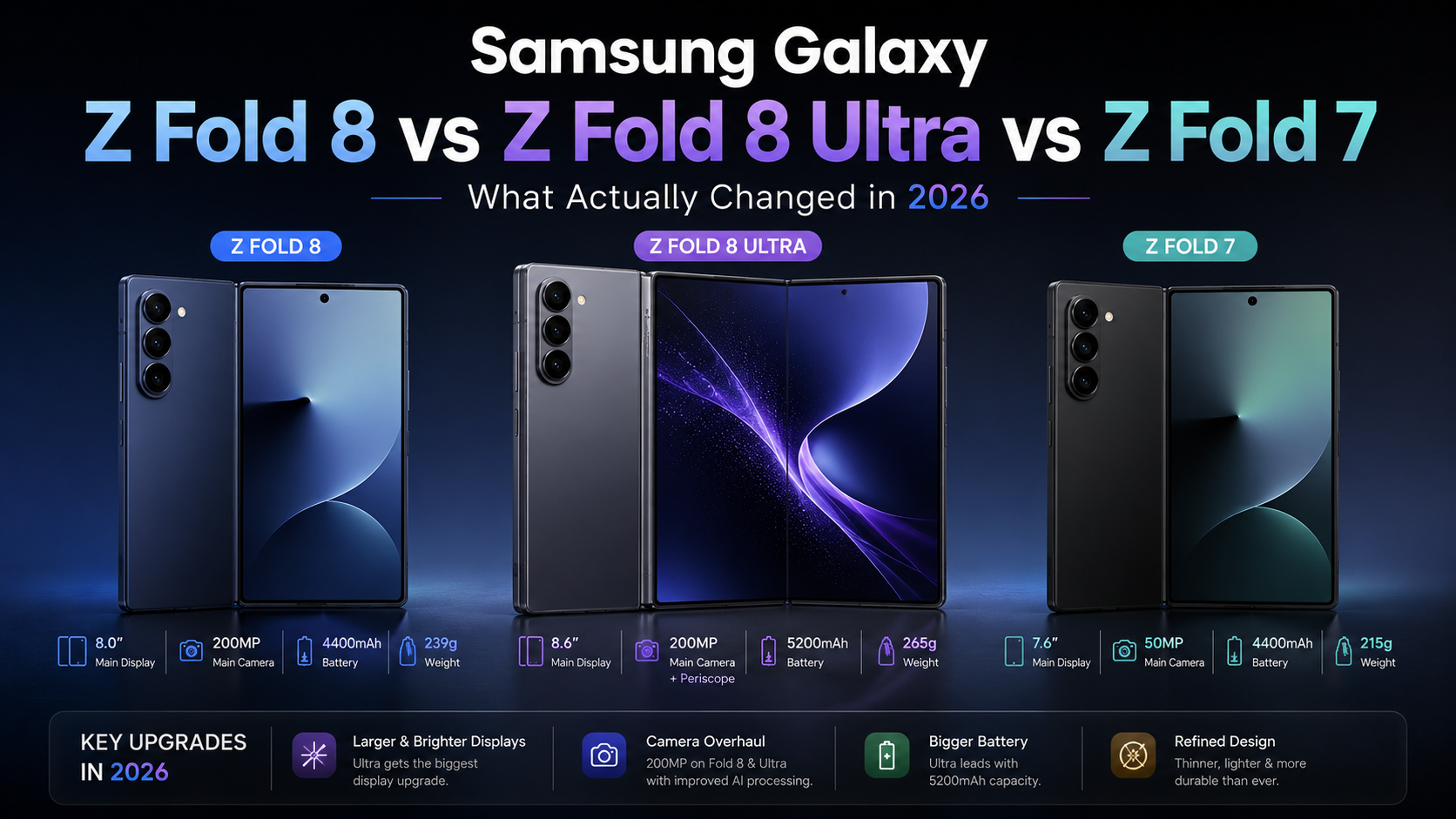
The Fold 7 and the new Fold 8 Ultra keep the familiar tall, near-square 8-inch inner display that Fold owners are used to — good for split-screen multitasking and typing like a mini laptop.
The standard Fold 8, however, has been redesigned around a wider 7.6-inch inner screen at a 4:3 aspect ratio, with a 5.5-inch cover screen. Unfolded, it's built for watching video and gaming in landscape. Rotated, it switches to a 3:4 ratio that Samsung says is more comfortable for reading and browsing. It's a genuinely different phone shape, not just a smaller Ultra.
Also Read: Samsung Galaxy Z Fold 8 vs Galaxy Z Fold 7: Is the Upgrade Really Worth It?
Both new models also get Samsung's Flex Titanium layer, which tightens the hinge mechanism and display tension to cut down on the visible crease — long the biggest complaint about book-style folds. The Fold 7 doesn't have this upgrade.
Brightness also moves up on the Ultra specifically, with Samsung quoting a 15% brighter panel than the Fold 7's, peaking around 3,000 nits — useful if you've ever tried to read a foldable outdoors in daylight.
Camera: the real dividing line
If photography matters to you, the decision is simple.
The Fold 8 Ultra carries a 200MP main sensor, an improved 50MP ultra-wide with wider apertures for low light, and a dedicated telephoto lens — plus 8K video recording. It's built to sit alongside the Galaxy S26 Ultra as a proper camera-first flagship.
The standard Fold 8 drops the telephoto entirely, leaning on a 2x in-sensor crop from its 50MP main camera instead — the same compromise Samsung made on the Fold 7. It's fine for social posts and everyday shots, but it's a clear step down from the Ultra, and arguably from the Fold 7's headline 200MP sensor too.
Also Read: Samsung Galaxy Z Fold 8 vs Z Fold 8 Ultra vs Z Fold 7: What Actually Changed in 2026
The Fold 7 actually still ships with a 200MP main sensor, which on paper edges out the standard Fold 8. If camera resolution alone is your deciding factor, the older phone isn't automatically the weaker choice.
Battery and everyday use
- Fold 7: 4,400mAh
- Fold 8: 4,800mAh, rated for 26+ hours of video playback, and Samsung's lightest Fold yet at 201 grams
- Fold 8 Ultra: 5,000mAh, 215 grams, 4.1mm thick unfolded — the thinnest Fold Samsung has made
Both new phones run on the Snapdragon 8 Elite Gen 5 for Galaxy, a step up from the Fold 7's chip, and all three support 45W wired charging.
AI and software
This is where the Ultra separates itself from being "just" a bigger camera. Samsung is leaning on agentic AI features exclusive to the new phones:
- Gemini Notebook turns uploaded meeting notes, PDFs, or audio recordings into summaries, slides, or quizzes
- Now Nudge watches for multitasking moments — like adding a plan from a messaging app straight into your calendar — and opens the right split-screen window automatically
- On the Fold 8, My FanCam can automatically reframe a video around one person after you tap to select them
The Fold 7 can run some Galaxy AI features through software updates, but the newest agentic tools are tied to the 2026 hardware.
Also Read: Samsung Galaxy Z Fold 8 — Ultimate Foldable Review
Which one should you actually buy?
- Buy the Fold 8 Ultra if you want the best camera, the most durable hinge, and the newest AI multitasking tools, and the extra £200 over the standard Fold 8 doesn't bother you.
- Buy the Fold 8 if you mainly use your foldable for video, reading, and everyday tasks, and you'd rather save money and carry the lightest Fold Samsung has ever made.
- Buy the discounted Fold 7 if you want the familiar tall foldable shape and a 200MP camera without paying 2026 flagship prices — just skip it if the crease reduction or newest AI tools matter to you.
Frequently asked questions
Is the Galaxy Z Fold 8 cheaper than the Fold 7 was at launch? Yes. The standard Fold 8 starts at £1,699 in the UK, £100 less than the Fold 7's £1,799 launch price a year earlier.
Does the Galaxy Z Fold 8 have a telephoto camera? No. Only the Fold 8 Ultra has a dedicated telephoto lens. The standard Fold 8 relies on a 2x crop from its main sensor.
When can I actually buy the Galaxy Z Fold 8 and Fold 8 Ultra? Pre-orders opened July 22, 2026, with general availability from August 7, 2026.
Is the crease actually better on the new Fold models? Samsung's new Flex Titanium display layer is designed specifically to reduce crease visibility and is only on the Fold 8 and Fold 8 Ultra, not the Fold 7.
Reporting based on Samsung's official Galaxy Unpacked July 2026 announcement and independent UK/US pricing coverage as of late July 2026. Specifications may be confirmed or adjusted at general retail availability.