



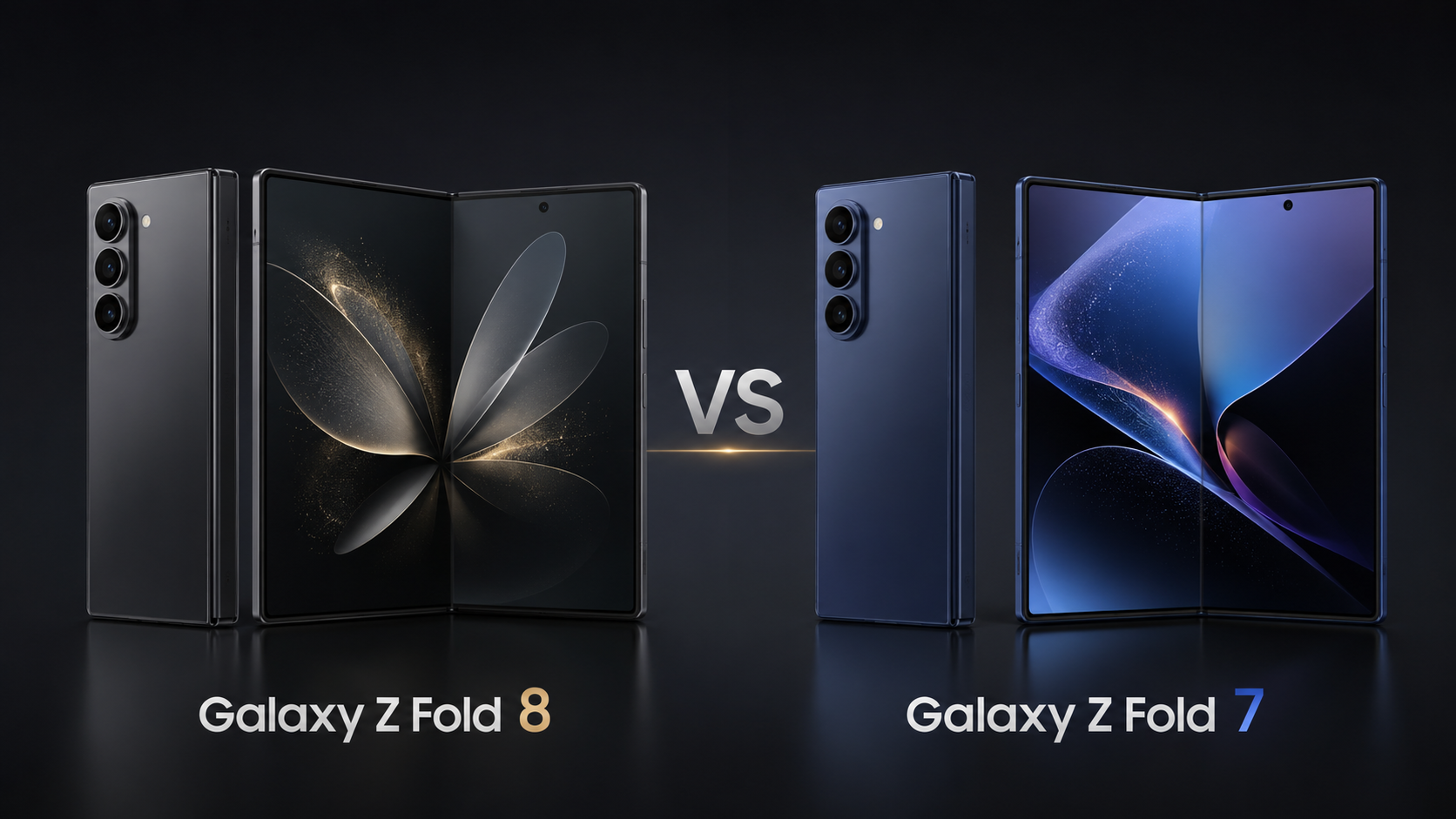
Samsung Galaxy Z Fold 8 vs Galaxy Z Fold 7: Is the Upgrade Really Worth It?
Samsung continues to push foldable smartphones into the mainstream, and the Galaxy Z Fold series remains its flagship productivity device. While the Galaxy Z Fold 7 already delivered a polished foldable experience, the newer Galaxy Z Fold 8 introduces refinements aimed at making everyday use more practical rather than reinventing the category.
For current Fold users, the biggest question isn't whether the Galaxy Z Fold 8 is a better phone—it almost certainly is. The real question is whether those improvements are meaningful enough to justify the cost of upgrading.
This comparison looks beyond specification sheets. Instead of focusing only on numbers, we'll examine how the differences affect daily use, productivity, photography, entertainment, gaming, and long-term ownership. If you're deciding between keeping your Galaxy Z Fold 7, upgrading to the Fold 8, or buying your first foldable, this guide is designed to help you make an informed decision.
At a Glance
| Feature | Galaxy Z Fold 8 | Galaxy Z Fold 7 |
|---|---|---|
| Design | Refined premium foldable | Premium foldable |
| Processor | Newer flagship chipset | Previous-generation flagship |
| Galaxy AI | Expanded AI capabilities | Earlier AI feature set |
| Cameras | Improved image processing | Excellent camera system |
| Battery | Similar capacity with efficiency gains | Reliable all-day battery |
| Software | Latest One UI and Android | Previous software generation |
| Durability | Incremental hinge and protection improvements | Strong durability |
| Best For | Power users and long-term buyers | Users satisfied with current performance |
Although the specifications don't appear dramatically different at first glance, many of the changes are cumulative. Small improvements in multiple areas often create a noticeably better overall experience.
What's New in the Galaxy Z Fold 8?
Rather than introducing one headline feature, Samsung appears to have focused on polishing nearly every aspect of the foldable experience.
Key improvements include:
- Updated flagship processor
- More capable Galaxy AI tools
- Better camera image processing
- Improved multitasking efficiency
- Enhanced software optimization
- Refined hinge engineering
- Longer software support window
- Improved power efficiency
- Better thermal management
- Enhanced productivity features
None of these upgrades individually transform the device, but together they aim to make the Fold 8 feel faster, smarter, and more reliable over years of use.
Also Read: Galaxy Z Fold 8 Full Review
Design: Familiar but More Refined
At first glance, both devices look remarkably similar. Samsung has maintained the signature Fold design that balances a smartphone on the outside with a tablet-sized display on the inside.
However, refinement matters.
The Galaxy Z Fold 8 focuses on improving details that users notice every day:
- Better weight distribution
- More comfortable grip
- Improved hinge feel
- Stronger overall construction
- Better resistance to everyday wear
These aren't dramatic visual changes, but they contribute to a device that feels more mature and polished.
Samsung has also continued refining its hinge technology, helping reduce visible folding artifacts while improving long-term durability. Foldables still require more care than traditional smartphones, but the technology has become considerably more reliable than early generations.
Display: Still One of the Best Foldable Screens
Samsung remains one of the industry's display leaders, and both phones offer excellent screens.
The Galaxy Z Fold 8 continues this tradition with improvements focused on usability rather than headline specifications.
Users can expect:
- Brighter outdoor visibility
- Better HDR performance
- Improved color consistency
- More responsive touch input
- Smoother adaptive refresh rate behavior
- Better efficiency during video playback
For reading, productivity, streaming, gaming, and multitasking, both devices remain among the strongest foldable options available.
Also Read: Samsung Galaxy S26 Ultra Review
If you already own the Fold 7, the display upgrade alone is unlikely to justify switching. However, when combined with other improvements across the device, the experience becomes noticeably more refined.
Performance: Faster Where It Actually Matters
Every flagship smartphone launches with a more powerful processor than its predecessor. The important question is whether you'll actually notice the difference.
For many everyday tasks—messaging, browsing, social media, streaming, and photography—the Galaxy Z Fold 7 already performs exceptionally well.
The Galaxy Z Fold 8's advantage becomes more noticeable during demanding workloads, including:
- Editing high-resolution photos
- Rendering videos
- Intensive gaming
- AI-powered image generation
- Large file processing
- Running multiple applications simultaneously
- Desktop-style productivity workflows
Samsung has also focused on improving thermal efficiency, allowing sustained performance under heavy workloads without aggressive throttling.
For professionals who rely on their Fold as a work device, these improvements may be more valuable than synthetic benchmark scores.
Galaxy AI Continues to Expand
Artificial intelligence has become one of Samsung's biggest priorities, and the Galaxy Z Fold 8 benefits from newer AI-powered features designed to improve productivity rather than simply adding novelty.
Examples include:
Writing Assistance
Galaxy AI can help rewrite text, summarize documents, adjust tone, and improve grammar directly within supported apps.
Live Translation
Real-time translation continues to improve, making multilingual conversations more natural for travelers and business users.
Also Read: Samsung Galaxy Z Flip 8 — Pocket Foldable Review
Meeting Summaries
AI-generated notes and summaries can reduce the time spent reviewing long meetings or conversations.
Image Editing
Generative editing tools help users remove distractions, expand backgrounds, and enhance photos without relying on third-party software.
Productivity Suggestions
Samsung continues integrating AI into multitasking workflows, helping users organize windows, manage tasks, and access frequently used tools more efficiently.
For users who regularly work on their phones, these AI enhancements may become more valuable over time as Samsung continues expanding software capabilities.
Camera Comparison: Small Hardware Changes, Smarter Results
For many buyers, the camera system is one of the biggest deciding factors. While the Galaxy Z Fold series has traditionally prioritized productivity over camera innovation, the Galaxy Z Fold 8 aims to deliver more consistent photography through software optimization and AI-powered image processing rather than a complete hardware overhaul.
If you're expecting DSLR-level improvements, you may be disappointed. However, if you care about more reliable photos in everyday situations, the Fold 8 has a noticeable edge.
Daylight Photography
Both phones produce detailed, colorful images with Samsung's signature vibrant look.
In good lighting, the differences are relatively subtle.
The Galaxy Z Fold 8 generally offers:
- Better highlight control
- More natural skin tones
- Improved HDR processing
- Slightly sharper edge detail
- Better handling of difficult lighting conditions
For casual photography, both devices perform at a flagship level, but the Fold 8 is more consistent when scenes become challenging.
Night Photography
Low-light photography is where newer image processing becomes more noticeable.
The Fold 8 improves:
- Noise reduction
- Exposure balance
- Shadow detail
- White balance accuracy
- Motion handling
Photos often appear cleaner without looking artificially over-processed.
Portrait Mode
Samsung has continued improving subject detection.
Compared with the Fold 7, portrait photos on the Fold 8 generally show:
- More accurate edge detection
- Better hair separation
- More realistic background blur
- Improved skin tone consistency
Zoom Performance
Samsung's zoom processing remains competitive.
The Fold 8 offers slightly cleaner digital zoom thanks to updated computational photography, although users shouldn't expect dramatic hardware-level differences if the optical zoom system remains similar.
Video Recording
Video remains one of Samsung's strongest areas.
The Fold 8 provides improvements such as:
- Better stabilization
- Improved HDR recording
- More consistent exposure transitions
- Better autofocus tracking
- Cleaner audio processing in noisy environments
Content creators who regularly shoot handheld video may appreciate these refinements.
Galaxy AI Photography Features
Samsung continues expanding AI-assisted photography.
Depending on software availability, users can benefit from features such as:
- AI object removal
- Generative photo editing
- Reflection reduction
- Improved portrait enhancement
- Automatic image suggestions
- Smart cropping
- AI-powered remastering
These tools don't replace good photography skills, but they can make quick edits easier without requiring third-party apps.
Also Read: Samsung Galaxy Z TriFold
Battery Life: Better Efficiency Matters More Than Bigger Numbers
Battery capacity alone doesn't tell the full story.
The Galaxy Z Fold 8 focuses on improving efficiency through:
- A newer chipset
- Smarter background management
- Better display power optimization
- Improved thermal efficiency
- AI-powered battery learning
As a result, users may see longer real-world battery life even if the battery capacity itself hasn't changed significantly.
Everyday Usage
Typical activities include:
- Web browsing
- Social media
- Messaging
- Camera usage
- Navigation
- Streaming
- Productivity apps
Under these conditions, both devices comfortably provide all-day battery life for most users.
Heavy multitasking and gaming will naturally consume more power on both phones.
Charging
Charging speeds remain competitive but are not the fastest in the flagship Android market.
Both devices support convenient charging options, including:
- Wired fast charging
- Wireless charging
- Reverse wireless charging (where available)
While some competing brands advertise higher charging wattages, Samsung continues emphasizing battery health and long-term reliability.
Software Experience
Samsung's software remains one of the biggest reasons to choose the Fold series.
The large inner display unlocks workflows that conventional smartphones simply can't match.
Examples include:
- Three-app multitasking
- Floating windows
- Drag-and-drop content
- Desktop-style productivity
- Samsung DeX support (where available)
- Split-screen workflows
These capabilities make the Fold series especially appealing for professionals, students, creators, and frequent travelers.
Galaxy AI Integration
Samsung continues embedding AI throughout the operating system instead of limiting it to standalone apps.
Examples include:
- Writing assistance
- Translation tools
- Note summarization
- Voice transcription
- Image editing
- Smart search
- Productivity recommendations
Many of these features become increasingly useful over time as software updates introduce new capabilities.
Productivity: Where Foldables Still Shine
The Fold series isn't just about having a larger screen.
Its biggest strength is reducing the need to switch between devices.
Examples include:
- Researching while taking notes
- Watching presentations while responding to emails
- Comparing documents side by side
- Editing spreadsheets
- Reviewing PDFs
- Video conferencing while referencing files
For professionals who regularly multitask, these capabilities can meaningfully improve efficiency.
Gaming Performance
Modern flagship processors easily handle demanding games.
The Fold 8 benefits from:
- Improved sustained performance
- Better heat management
- More stable frame rates
- Faster AI-assisted processing
- Improved graphics efficiency
The large internal display also creates a more immersive gaming experience, particularly for strategy, racing, and RPG titles.
Which Phone Feels Faster?
In benchmark tests, the Fold 8 will almost certainly outperform the Fold 7.
However, benchmarks don't always reflect everyday use.
During typical activities such as:
- Messaging
- Streaming
- Social media
- Photography
- Navigation
- Video playback
Both phones remain extremely responsive.
The biggest differences appear during demanding workflows involving AI processing, gaming, multitasking, and professional applications.
Price and Value
Foldable smartphones remain premium devices, so value depends heavily on your starting point.
Buy the Galaxy Z Fold 8 if you:
- Want the newest Samsung foldable
- Plan to keep your phone for several years
- Frequently multitask
- Use Galaxy AI features regularly
- Create content on your phone
- Want Samsung's latest software experience
Keep the Galaxy Z Fold 7 if you:
- Are happy with its current performance
- Mainly browse, stream, and message
- Don't rely heavily on AI features
- Don't need incremental camera improvements
- Prefer waiting another generation for a larger upgrade
For many existing Fold 7 owners, upgrading immediately may not provide enough additional value unless specific new features address their daily workflow.
Should You Upgrade?
The answer depends on which Fold you currently own.
Upgrading from Fold 5 or older
Yes.
You'll experience significant improvements in:
- Display quality
- Performance
- Camera processing
- Battery efficiency
- Software support
- Galaxy AI
- Durability
- Productivity
Upgrading from Fold 6
Maybe.
Consider upgrading only if you specifically want the newest AI features, improved efficiency, or any hardware refinements that matter to your workflow.
Upgrading from Fold 7
Probably not for most users.
The Galaxy Z Fold 8 is a better phone, but the improvements are evolutionary rather than revolutionary.
Unless your Fold 7 has hardware issues or you specifically need the latest AI capabilities, waiting for a future generation may provide better value.
Who Should Buy the Galaxy Z Fold 8?
The Fold 8 is a strong choice for:
- Professionals who multitask frequently
- Business users
- Content creators
- Mobile photographers
- Frequent travelers
- Power users who value productivity
- Buyers upgrading from older foldables or traditional flagship phones
Who Should Skip It?
You may want to skip the Fold 8 if:
- You already own a Galaxy Z Fold 7 and are satisfied with it.
- Your primary needs are messaging, social media, and media streaming.
- You prefer a lighter, more compact smartphone.
- You don't anticipate using multitasking or Galaxy AI features regularly.
- You're looking for the most affordable flagship available.
Final Verdict
The Samsung Galaxy Z Fold 8 represents thoughtful refinement rather than a dramatic redesign. It builds on the strengths of the Galaxy Z Fold 7 with smarter AI features, improved efficiency, refined cameras, and continued software enhancements.
For first-time foldable buyers or users upgrading from much older devices, the Fold 8 is an excellent choice that showcases Samsung's latest vision for premium mobile productivity.
For current Galaxy Z Fold 7 owners, however, the decision is less clear-cut. While the Fold 8 is objectively more capable, the improvements are incremental. Unless the new AI tools, software refinements, or efficiency gains directly benefit your daily workflow, keeping the Fold 7 for another generation is a sensible option.
Ultimately, the better choice depends less on benchmark numbers and more on how you use your phone. If your smartphone doubles as a portable workstation, the Galaxy Z Fold 8 offers one of the most polished foldable experiences available today.
Frequently Asked Questions
Is the Galaxy Z Fold 8 significantly better than the Galaxy Z Fold 7?
It offers meaningful refinements in performance, AI capabilities, camera processing, and efficiency, but the overall experience remains evolutionary rather than revolutionary.
Should Fold 7 owners upgrade?
Most Fold 7 owners can comfortably wait unless the newest AI features or workflow improvements are especially valuable to them.
Which phone is better for productivity?
Both excel at multitasking, but the Fold 8 benefits from newer software optimizations and expanded Galaxy AI functionality.
Is the Fold 8 good for gaming?
Yes. Its large internal display, flagship processor, and improved thermal management make it well suited for demanding mobile games.
Is the Galaxy Z Fold 8 worth buying in 2026?
For users entering the foldable ecosystem or upgrading from older devices, it is one of the strongest premium foldable options available.