





Quick Summary
Agentic AI refers to AI systems that can carry out multi-step tasks on their own — planning, using tools, and making decisions along the way — rather than simply generating a single answer to a single prompt. In 2026, it's become the central selling point across phones, laptops, and software platforms.
Key Takeaways
- Traditional AI assistants respond to one prompt at a time; agentic AI can complete multi-step goals
- It typically involves planning, tool use, and checking its own results along the way
- Samsung, Apple, and major software platforms are all building agentic features into 2026 products
- It's still limited — best suited for well-defined tasks, not fully open-ended goals
From "Answering" to "Doing"
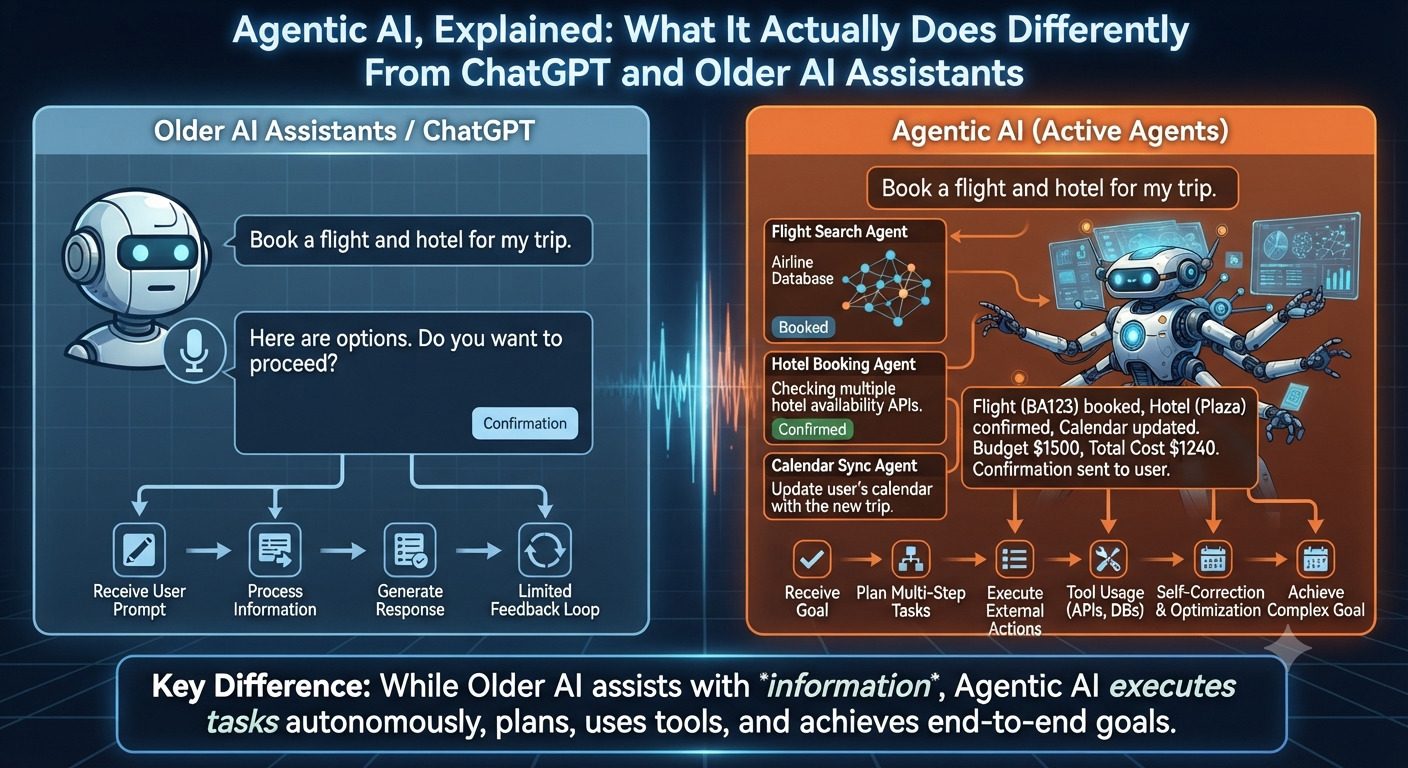
For years, AI assistants like the early versions of ChatGPT or Google Assistant worked in a simple loop: you asked something, it answered, and the interaction ended. Agentic AI changes that loop. Instead of a single response, an agentic system can break a request into steps, decide what needs to happen first, use apps or tools to carry out those steps, and check whether the outcome actually matches what was asked.
A Simple Example
Ask a traditional assistant to "find me a flight," and it might search and hand you a list of options to sort through yourself. An agentic system can go further — checking your calendar for available dates, comparing several options against your stated preferences, and presenting a shortlist or even completing a booking, only pausing to confirm before anything irreversible happens.
Why It's Suddenly Everywhere in 2026
At Samsung's Unpacked event this month, the company's device chief said AI features, many of them agentic, are expected to be present in over 800 million Samsung devices by the end of the year. Apple, Google, and major productivity software makers have made similar moves, building agent-like features into everyday tools rather than keeping them as separate chatbot apps.
What It Can't Do Yet
Agentic AI still performs best on tasks with clear boundaries — booking, organizing, summarizing, comparing. Fully open-ended goals, ones requiring nuanced judgment or long-term context, remain difficult. Most current systems also still ask for confirmation before taking actions that can't easily be undone, which is intentional — it keeps a person in the loop rather than letting the system act completely unsupervised.
The Practical Takeaway
If a product description mentions "agentic AI," the real question to ask isn't whether it's smart — it's how many steps it can complete reliably without you double-checking its work. That's the actual difference from the chatbots most people are used to.
FAQ
Q: Is agentic AI the same as a chatbot?
No. A chatbot typically responds to one message at a time, while agentic AI can plan and complete a sequence of tasks toward a goal.
Q: Which companies are using agentic AI in 2026?
Samsung, Apple, and several major software platforms have introduced agentic AI features across phones, wearables, and productivity tools this year.
Q: Is agentic AI safe to let run without supervision?
Most current systems are designed to pause and ask for confirmation before taking actions that can't be undone, keeping a person involved in key decisions.