



She does not sleep.
She does not age.
She does not need a trailer.
And she is about to lead a feature film.
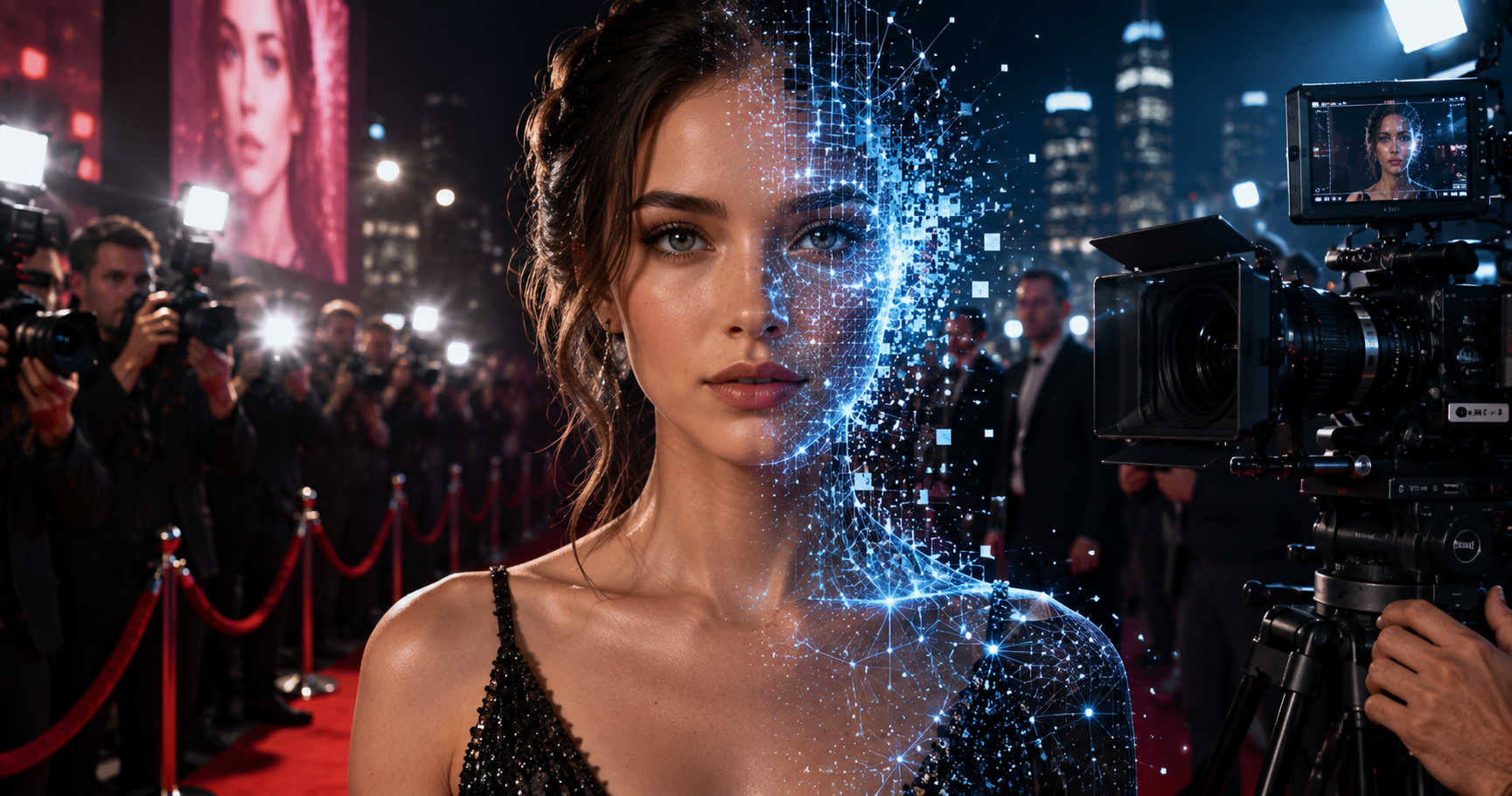
Tilly Norwood, the controversial AI-generated digital performer that has already divided Hollywood, is moving onto the big screen.
The virtual character is set to take the lead in a new comedy-drama called Misaligned.
This is not a background experiment.
It is a full feature project built around an AI-generated character.
The announcement has reopened one of Hollywood's most uncomfortable questions.
What happens when the actor on screen is not human?
Who Exactly Is Tilly Norwood?
Tilly Norwood is a computer-generated character created by the AI-focused entertainment company Particle6.
She has been presented publicly as an AI "actor", although that description remains highly controversial.
Tilly does not have personal memories.
She has no childhood.
She has never attended an acting school.
She does not experience fear, happiness or grief.
The character exists through artificial intelligence and digital production technology.
Yet she has been developed with an appearance, public identity and entertainment presence designed to function in ways audiences normally associate with a celebrity.
That distinction is exactly why Hollywood cannot stop talking about her.
Misaligned Will Put the AI Character at the Centre of a Movie
Tilly's first major feature film is called Misaligned.
The comedy-drama is being developed by Particle6, the company behind the digital character.
According to industry reporting, the story follows an artificial intelligence experiencing human emotions while moving through a surreal digital world.
The project is significant because Tilly is not simply being used for a short online video or technology demonstration.
She is being positioned as the lead of a feature-length film.
That creates a much bigger test.
Can audiences emotionally connect with a synthetic performer for the length of an entire movie?
Hollywood may soon receive an answer.
The Biggest Question Is Whether AI Can Actually Act
Acting is not simply reading words.
A great performance can depend on silence.
A facial expression.
A slight movement.
The timing of a breath.
An actor may use personal experiences to understand a character's emotions.
Directors often ask performers to interpret scenes rather than mechanically follow instructions.
This creates an obvious problem for the idea of an AI actor.
Tilly does not experience the emotions she appears to show.
If the character looks heartbroken, the digital performance is presenting a visual interpretation of heartbreak.
The AI itself is not suffering.
Critics argue that this difference matters.
Supporters of synthetic performers may respond that audiences already emotionally connect with animated characters.
The debate is becoming increasingly complicated.
Hollywood Actors Have Already Pushed Back
Tilly Norwood has faced intense criticism since attracting wider attention.
Actors and entertainment industry groups have questioned the use of AI-generated performers.
SAG-AFTRA previously condemned the idea of presenting Tilly as an actor, arguing that human performance is based on life experience and emotion.
The union has also raised wider concerns about synthetic performers and the potential impact of artificial intelligence on entertainment work.
Those concerns are not disappearing.
A feature film gives the controversy a much larger stage.
Theoretical discussions about AI replacing actors feel very different when a digital character is actually placed at the centre of a movie.
Critics Are Asking Where the Training Data Came From
One of the most serious questions surrounding AI-generated performers involves training data.
Generative AI systems learn patterns from existing information.
In visual entertainment, those patterns may include faces, expressions, movements and artistic work.
Some critics are questioning whether synthetic performers can be created without drawing from the work of real humans.
Fresh reporting around Tilly's feature debut has again raised concerns that AI-generated acting may imitate patterns found in existing human performances.
This creates both an ethical and legal debate.
If an AI-generated expression resembles the work of thousands of human performers, who should receive credit?
If a synthetic face appears similar to a real person, where does inspiration end and identity begin?
The entertainment industry does not yet have simple answers.
An AI Performer Could Work Forever
From a business perspective, the attraction of digital performers is obvious.
A synthetic character does not become physically tired.
The character cannot arrive late to a film set.
It does not need to travel.
Its digital appearance can potentially remain consistent for decades.
A studio could theoretically use the same character across films, advertising, games and virtual experiences.
The character could also appear in multiple languages.
That level of control may be extremely attractive to entertainment companies.
But what looks efficient to a studio may look threatening to a human performer.
Actors are asking whether companies will eventually choose controllable digital characters over real people.
Could AI Actors Become Cheaper Than Humans?
Cost is another major part of the discussion.
Major film stars can receive enormous salaries.
Film productions also require scheduling, travel, accommodation, insurance and large crews.
AI technology creates the possibility of changing parts of that cost structure.
However, describing AI filmmaking as free would be misleading.
Creating consistent, high-quality digital characters requires technology.
AI systems require computing resources.
Artists, engineers, writers and production specialists may still be involved.
The film itself still needs creative direction.
The real question is whether AI can eventually reduce enough production costs to make synthetic performers commercially attractive.
If the answer is yes, Hollywood's resistance may face a difficult economic reality.
Audiences Will Decide Whether the Experiment Works
Technology companies can build AI performers.
Studios can finance AI movies.
But audiences still decide what they want to watch.
This may become the most important test for Misaligned.
Viewers are often willing to accept artificial characters.
Animation has created some of the most emotionally powerful characters in cinema history.
Video game audiences regularly form deep connections with digital personalities.
The difference is transparency and presentation.
An animated character is normally presented as animation.
Tilly is being discussed as an AI "actor".
That language deliberately places the character closer to human performers.
Some viewers may find the concept fascinating.
Others may reject it immediately.
The box office and audience reaction could influence what studios do next.
This Is Bigger Than One Digital Character
Tilly Norwood may succeed.
She may fail.
Misaligned could become a major hit or disappear quickly.
But the technology behind the debate will continue developing.
AI video generation is improving.
Synthetic voices are becoming more convincing.
Digital humans are becoming increasingly realistic.
Studios are experimenting with new production workflows.
The future of entertainment will not be decided by one character.
Tilly is important because she represents a visible test of technology that may become much more common.
Hollywood is effectively being forced to confront the issue in public.
Human Actors Are Fighting for More Than Jobs
The reaction from performers is not only about employment.
It is also about identity.
An actor's face can have commercial value.
Their voice can be recognisable.
Their movement and performance style may become part of their professional identity.
AI technology creates the possibility of reproducing elements of those characteristics.
This is why digital replica protections have become such an important issue for entertainment unions.
Actors want control over how their likenesses are used.
They also want to know whether AI systems are benefiting from human performances without meaningful consent or compensation.
The rise of synthetic characters makes those concerns even more urgent.
The Film Industry Has Faced Technological Revolutions Before
Hollywood has repeatedly changed because of technology.
Silent films gave way to sound.
Black-and-white cinema moved into colour.
Computer-generated imagery transformed visual effects.
Digital cameras changed production.
Streaming changed distribution.
Each transformation created resistance.
AI supporters often argue that generative technology is simply the next tool.
Critics say this comparison ignores a major difference.
Previous tools generally helped human performers create entertainment.
Synthetic performers could potentially compete directly with them.
That is why the current debate feels different.
Could a Digital Celebrity Build a Real Fanbase?
Celebrity culture is built around more than films.
Fans follow interviews.
They watch social media.
They discuss relationships.
They follow fashion.
They become interested in the person behind the performance.
An AI-generated celebrity changes that relationship.
There is no private life behind Tilly Norwood.
Any public personality can be designed.
Any social media post can be part of a creative strategy.
The character's image can potentially be controlled far more carefully than a human celebrity's public identity.
That may create a new type of entertainment figure.
The question is whether fans will emotionally invest in someone they know does not exist.
Misaligned Could Become a Historic Success or a Famous Failure
The pressure surrounding the film is now enormous.
If audiences embrace Tilly, other companies may accelerate their own AI character projects.
Studios could see evidence that synthetic performers have commercial potential.
More digital actors may appear.
If the film fails, critics will argue that audiences still want human performances.
Either outcome will be studied closely.
This makes Misaligned more than another experimental movie.
It is becoming a test case for the future of AI entertainment.
Hollywood's AI Debate Is About to Become Real
For years, people have asked whether artificial intelligence will replace actors.
The question often sounded theoretical.
Now an AI-generated character is preparing to lead a feature film.
The debate is moving from conference panels and social media arguments onto the screen.
Tilly Norwood may not feel emotion.
She may not understand fame.
She may not even understand that a film is being created around her digital identity.
But Hollywood understands what the project represents.
If audiences accept an AI movie star, the entertainment industry could change very quickly.
And if they reject her, studios will learn that technological capability does not automatically create a celebrity.
Either way, everyone will be watching.