





The Rise of Autonomous Agentic Workflows: How Multi-Agent Systems Are Redefining Enterprise Operations

Moving past conversational prompts, autonomous software networks are handling end-to-end execution across modern organizations.

Getty Images / Editorial Archive
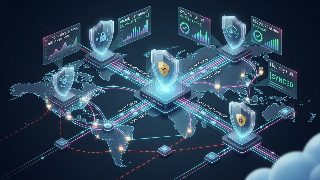
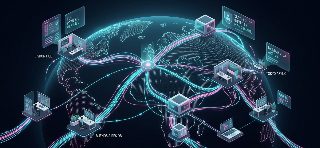
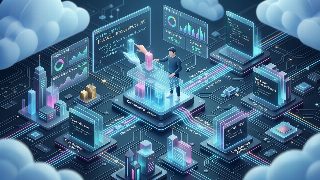
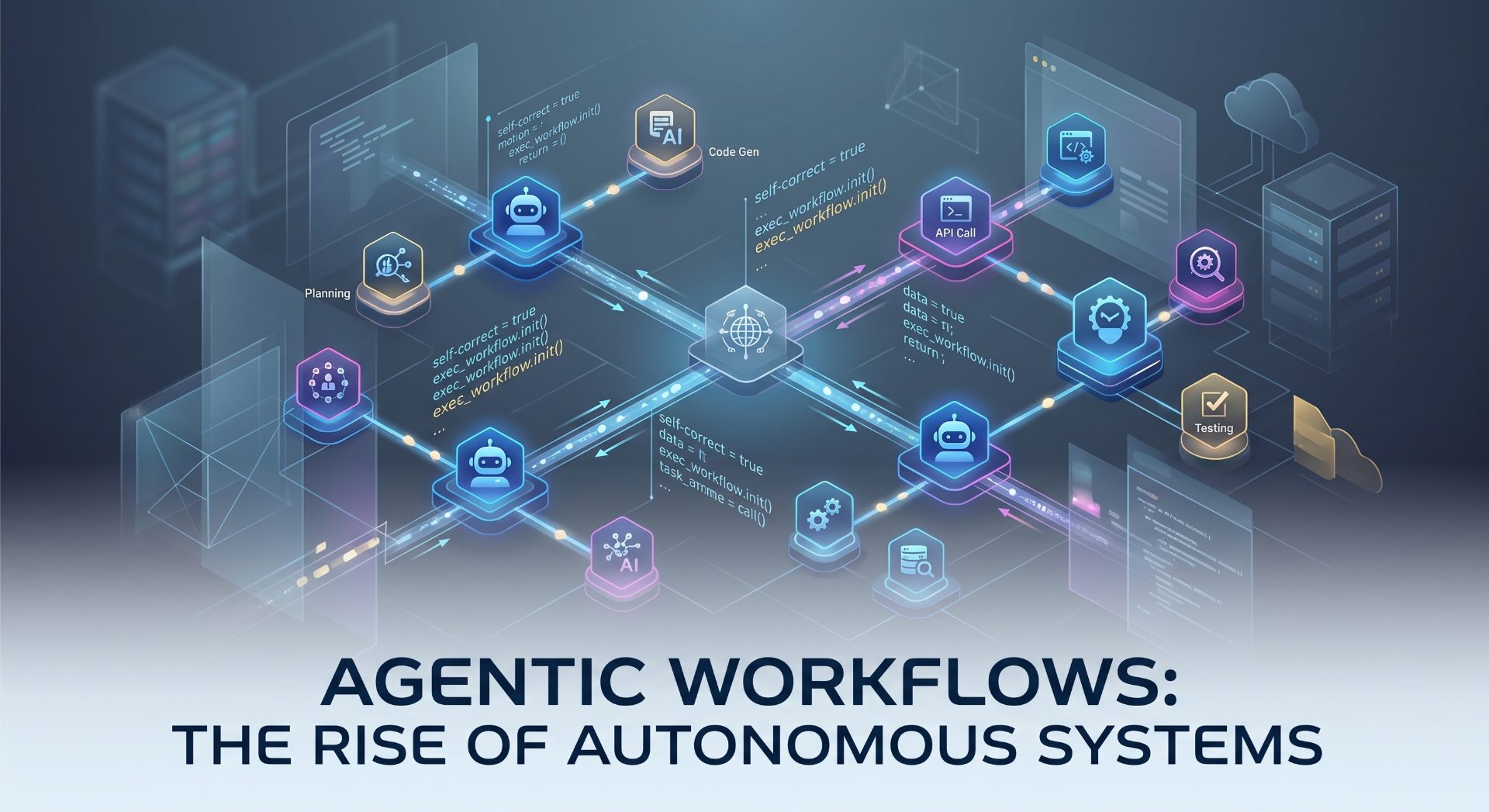
A conceptual visualization of distributed AI agents collaborating across enterprise cloud infrastructure. Getty Images / Editorial Archive

The enterprise narrative around artificial intelligence has reached an inflection point. For the past several years, generative AI has largely functioned as an interactive tool—a reactive copilot responding to individual prompts, drafting text, or writing isolated snippets of code. While valuable, this model still relied entirely on a human in the loop to formulate the strategy, verify the output, and physically shuttle data across platforms.

That dynamic is undergoing a structural change with the emergence of agentic workflows and multi-agent architectures.

Instead of treating large language models as standalone text generators, modern engineering teams are deploying them as centralized reasoning engines within autonomous environments. In an agentic system, models are assigned high-level objectives, granted access to tools and external APIs, and given the autonomy to plan, iterate, self-correct, and execute complex workflows without ongoing human oversight.

The Fundamental Shift: From Chat to Orchestration

The transition from generative chat to agentic execution hinges on four core architectural capabilities:

  1. Iterative Planning and Decomposition:

    Unlike single-turn inference, an agentic framework breaks a complex objective down into smaller sub-tasks. It determines the order of operations, defines milestones, and adapts its plan when edge cases or system errors occur.

  2. Tool and API Integration:

    Agents are equipped with interfaces to real-world environments. They can read from vector databases, invoke third-party REST endpoints, run unit tests in sandboxed runtimes, and trigger internal automations.

  3. Memory and Context Management:

    Through hybrid short-term memory (in-context working memory) and long-term memory (vector embeddings and knowledge graphs), agents retain operational context across multiple sessions, eliminating repetitive prompting.

  4. Multi-Agent Collaboration:

    Rather than asking a single model to handle an entire enterprise pipeline, multi-agent frameworks distribute tasks among specialized roles. For instance, in software development, one agent generates the architecture, another writes the source code, a third writes and executes integration tests, and a fourth audits security vulnerabilities before human sign-off.

Operational Impacts Across Key Industries

The enterprise value of agentic systems is already visible across several mission-critical verticals:

  • Software Engineering and DevOps: Beyond auto-complete suggestions, autonomous agents manage end-to-end bug triage, generate test suites against live codebases, resolve runtime errors within CI/CD pipelines, and open pull requests with detailed implementation documentation.

  • Customer Support and Complex Service Delivery: Moving beyond scripted chatbots, agentic support architectures look up billing histories, cross-reference policy constraints, interface with payment gateways, and execute refunds or provisioning changes autonomously.

  • Financial Services and Risk Modeling: Multi-agent swarms ingest market signals, run parallel risk simulations, audit regulatory filings against compliance frameworks, and deliver structured advisory summaries for portfolio managers.

  • Supply Chain and Logistics Orchestration: Agents monitor real-time shipping telematics, spot port congestion anomalies, and automatically renegotiate route assignments or warehouse allocations within predetermined cost limits.

Governance, Sandboxing, and the Human-in-the-Loop Imperative

Deploying autonomous agents into production environments introduces critical governance questions. Without deterministic guardrails, autonomous systems risk compounding execution errors, executing unauthorized transactions, or exposing sensitive operational data.

Enterprise leaders are addressing this by implementing bounded autonomy:

  • Sandboxed Execution: Restricting agents to isolated cloud environments with limited, role-based database and API access.

  • Approval Checkpoints: Mandating human approval for high-risk actions—such as committing production code, initiating monetary transfers, or contacting tier-one clients directly.

  • Traceable Audit Trails: Logging reasoning steps, tool calls, and model decisions in structured formats to ensure complete regulatory compliance and reproducibility.

The goal of the agentic revolution is not to remove human intelligence from enterprise strategy, but to liberate it from routine operational plumbing. Organizations that architect reliable, governed agentic workflows today will build an insurmountable operational velocity advantage tomorrow.
Quick Summary

The generative AI paradigm is shifting from conversational assistants to goal-driven multi-agent architectures. Rather than waiting for manual inputs at every stage, autonomous agentic workflows now orchestrate complex reasoning, call external APIs, self-correct errors, and execute end-to-end tasks across distributed software ecosystems.

Key Takeaways

  • Iterative Planning and Decomposition:Unlike single-turn inference, an agentic framework breaks a complex objective down into smaller sub-tasks. It determines the order of operations, defines milestones, and adapts its plan when edge cases or system errors occur.
  • Tool and API Integration:Agents are equipped with interfaces to real-world environments. They can read from vector databases, invoke third-party REST endpoints, run unit tests in sandboxed runtimes, and trigger internal automations.
  • Memory and Context Management:Through hybrid short-term memory (in-context working memory) and long-term memory (vector embeddings and knowledge graphs), agents retain operational context across multiple sessions, eliminating repetitive prompting.
  • Multi-Agent Collaboration:Rather than asking a single model to handle an entire enterprise pipeline, multi-agent frameworks distribute tasks among specialized roles. For instance, in software development, one agent generates the architecture, another writes the source code, a third writes and executes integration tests, and a fourth audits security vulnerabilities before human sign-off.
  • Software Engineering and DevOps: Beyond auto-complete suggestions, autonomous agents manage end-to-end bug triage, generate test suites against live codebases, resolve runtime errors within CI/CD pipelines, and open pull requests with detailed implementation documentation.

Quick Facts

Category: Technology
Published: September 4, 2026
Updated: October 8, 2026
Reading time: 3 min
97 views
Updated Oct 8, 2026 3 min read

Related Articles

View all
The 2026 Smartphone Divide: iPhone vs. Android Technology
Article Technology

The 2026 Smartphone Divide: iPhone vs. Android

As we move through 2026, the long-standing rivalry between iOS and Android has evolved. While both platforms are more capable and secure than ever, they serve fundamentally different philosophies: Apple’s curated ecosystem versus Android’s open-source flexibility.

Orwell, George 9 min 293

Mixed Content

Technology
Article Technology

The Post-Automation Economy: Architecting Human Skill Premiums in the Age of Autonomy

The rapid proliferation of agentic workflows and large action models is structurally inverting the traditional corporate skill pyramid. While routine analytical processes and information retrieval tasks are being automated into low-cost utility, uncommoditizable human traits—emotional intelligence, strategic ambiguity management, and ethical governance—are commanding an unprecedented value premium. Succeeding in the post-automation enterprise requires re-engineering workforce development to focu

Mutwassim 3 min 72
The Decline of Friction: Inside the FinTech Revolution in Cross-Border Settlement and Digital Identity Technology
Article Technology

The Decline of Friction: Inside the FinTech Revolution in Cross-Border Settlement and Digital Identity

The traditional plumbing of global finance—characterized by multi-day delays, hidden fees, and fragmented identity silo—is undergoing a profound transformation. A new generation of FinTech architectures, combining distributed ledger technology (DLT), synchronized liquidity pools, and decentralized digital passports, is enabling cross-border instant payments with near-zero friction.

Mutwassim 1 min 44
The City as a Switch: Architecting IoT Logistics for the Post-Congestion Urban Era Technology
Article Technology

The City as a Switch: Architecting IoT Logistics for the Post-Congestion Urban Era

The traditional model of urban delivery—reliant on high-emission diesel vans navigating static street grids—is creating unsustainable levels of congestion and pollution in global metros. To reclaim urban space, cities are transitioning to IoT-orchestrated logistics. This data-driven framework utilizes autonomous delivery swarms, automated micro-fulfillment centers, and dynamic digital kerb-side management to route goods with the efficiency of internet packets, transforming static streets into fl

Mutwassim 4 min 71
Beyond the Coffee Shop: How Cross-Border Employment and Sovereign Visas Are Institutionalizing Remote Work Technology
Article Technology

Beyond the Coffee Shop: How Cross-Border Employment and Sovereign Visas Are Institutionalizing Remote Work

Remote work is transitioning from an informal perk into an institutionalized pillar of international commerce. Over 60 nations have launched dedicated digital nomad visa regimes, while multi-jurisdictional compliance platforms and Employer of Record (EOR) frameworks dismantle traditional geographic barriers. As knowledge workers disperse globally, enterprises and municipal governments are formalizing policies around tax residency, permanent establishment risk, and asynchronous operational workfl

Mutwassim 3 min 71
The Death of Syntax: Inside the Shift to Intent-Driven Software Engineering Technology
Article Technology

The Death of Syntax: Inside the Shift to Intent-Driven Software Engineering

The day-to-day discipline of software engineering is undergoing its most radical abstraction leap since the transition from assembly language to high-level compilers. Generative code synthesis and deterministic reasoning engines are automating boilerplate syntax, turning software developers into systems architects. Survival in this new paradigm demands mastering intent formalization, specification design, and continuous verification.

Mutwassim 3 min 71
The Post-Visual Threat: Architecting Zero-Trust Defense Against Weaponized Deepfakes Technology
Article Technology

The Post-Visual Threat: Architecting Zero-Trust Defense Against Weaponized Deepfakes

The rapid weaponization of real-time voice cloning and synthetic video generation has transformed social engineering from opportunistic phishing into targeted executive identity emulation. High-profile incidents involving multi-million-dollar wire transfers authorized via synthetic video calls prove that sight and sound can no longer authenticate authorization. Securing modern enterprises requires an uncompromising zero-trust identity layer capable of neutralizing synthetic deception.

Mutwassim 3 min 139
Beyond the Battery: How Electric Mobility Is Forcing a Overhaul of the Global Power Grid Technology
Article Technology

Beyond the Battery: How Electric Mobility Is Forcing a Overhaul of the Global Power Grid

The global transition toward electric vehicles is no longer constrained primarily by battery chemistry or vehicle range. Instead, the real bottleneck has shifted directly to the electrical grid. As commercial fleets and passenger cars electrify at scale, utilities and city planners are racing to deploy vehicle-to-grid (V2G) bidirectional systems, AI-driven dynamic load balancers, and decentralized microgrid storage to avoid grid failure.

Mutwassim 3 min 58
Cloud 3.0: The Shift Toward Sovereign Data Architectures and Edge Computing Technology
Article Technology

Cloud 3.0: The Shift Toward Sovereign Data Architectures and Edge Computing

The architectural assumption that enterprise compute and storage should reside in a handful of centralized hyperscaler data centers is fracturing. Driven by strict cross-border data sovereignty regulations and the demand for millisecond-latency AI inference, global IT leaders are pivoting to Cloud 3.0—a model centered on distributed, locally governed, and hybrid sovereign architectures.

Mutwassim 3 min 61