





Meta's latest artificial intelligence experiment did not survive its first week.
The technology giant has discontinued a controversial AI image feature connected to Instagram after criticism erupted over privacy, consent and the use of content from public accounts.
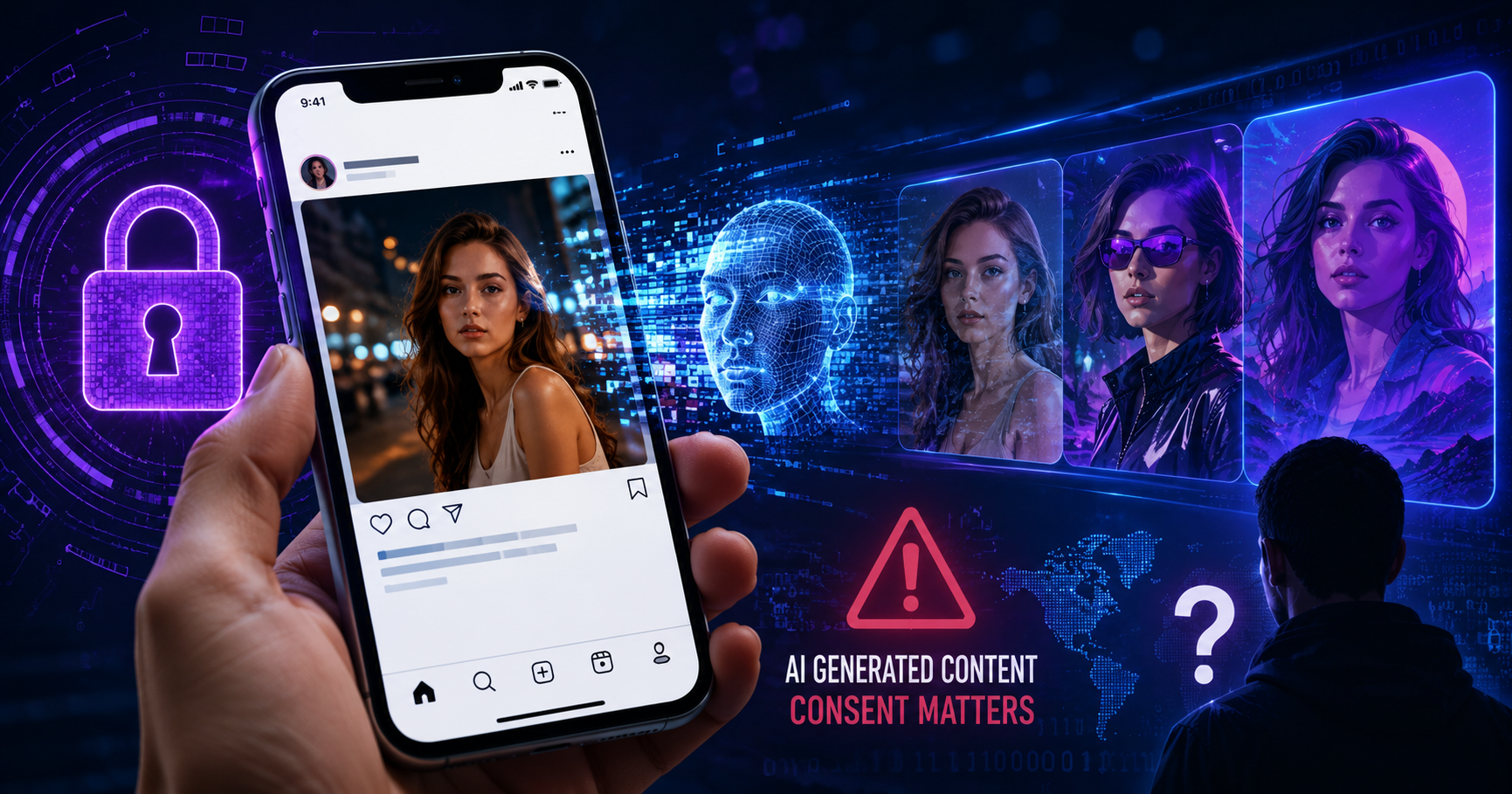
The feature was linked to Meta's new Muse Image technology and allowed people to generate AI-created images using content associated with public Instagram accounts.
What was presented as a creative AI experience quickly became the centre of a much larger debate.
The question raised by users, actors and digital rights observers was simple: should a public photo automatically become available for this kind of AI use?
Meta's answer, after days of backlash, was to remove the feature.
What Did the New Instagram AI Tool Actually Do?
The controversial functionality formed part of Meta's expanding AI image-generation tools.
Users could generate images involving public adult Instagram accounts. Publicly available content from those accounts could be used within the AI experience.
That immediately attracted attention because the person shown in the original content did not necessarily have to actively approve each generated image.
The feature's availability quickly led to warnings across social media.
Users began sharing information about privacy settings, while critics questioned whether an opt-out approach provided enough protection for people's faces and identities.
The debate moved beyond a normal product update within days.
It became a discussion about digital consent.
Why Privacy Concerns Spread So Quickly
AI image generators have become dramatically more capable.
A person's face can now be placed into fictional scenes, altered environments and synthetic situations with increasing realism.
That creates exciting possibilities for creative tools, but it also creates obvious risks.
People may lose control over how their appearance is represented. Misleading images can spread rapidly. Harassment and impersonation become easier when powerful image-generation tools are accessible to millions of users.
The Instagram controversy touched directly on these fears.
Critics argued that making an account public for social sharing should not automatically be interpreted as permission for other users to generate AI images based on that person's content.
For many users, public visibility and AI consent are two completely different decisions.
The Opt-Out Approach Became a Major Problem
One of the strongest criticisms focused on how user choice was handled.
Reports said the functionality was automatically enabled for eligible public accounts rather than requiring people to actively opt in.
That distinction matters.
An opt-in system asks a person for permission before activating a feature.
An opt-out system can make the feature available unless the person discovers the setting and disables it.
For ordinary social media users who do not regularly inspect every privacy setting, the difference can be significant.
The backlash demonstrated that AI features involving identity may require a much higher level of transparency than standard social media updates.
Actors and Entertainment Groups Entered the Debate
The controversy became even more serious when entertainment industry organisations raised concerns.
SAG-AFTRA criticised the feature and highlighted the risks surrounding nonconsensual digital replicas.
Actors, performers and online creators have become increasingly concerned about how artificial intelligence can reproduce their appearance, voice and creative identity.
For a professional performer, a face is not simply profile content.
It can be part of a career, commercial identity and protected creative work.
The growth of generative AI has forced entertainment companies, technology platforms and regulators to confront questions that were far less urgent only a few years ago.
Who controls a digital likeness?
When is consent required?
Can permission be assumed because an image is publicly visible?
The Instagram controversy placed those questions directly in front of a global social media audience.
Meta Admits the Feature Missed the Mark
The response from Meta came quickly.
The company said the AI feature was intended to provide a creative experience with user control, but acknowledged that it had missed the mark.
Meta then discontinued the controversial functionality.
The decision came only days after the feature's launch, making the reversal unusually fast for a major technology product.
SAG-AFTRA welcomed the decision to disable the feature.
However, removing one tool does not end the wider discussion.
AI image technology is continuing to improve, and social platforms are increasingly integrating generative systems directly into products used by billions of people.
The same consent questions are likely to appear again.
Public Photos Are Entering a New Era
For years, internet users have been told to think carefully before making photos public.
Artificial intelligence adds another layer to that advice.
Previously, the main concern may have been someone downloading, reposting or manually editing an image.
Generative AI changes the scale of possible manipulation.
A publicly available photograph can potentially become source material for countless synthetic variations.
The original person may never see those creations.
This does not mean every AI-generated image is harmful. Many people actively enjoy using their own photos in creative AI tools.
The critical issue is control.
Users increasingly want to decide when their face, voice or identity becomes part of an AI experience.
The Incident Shows Why AI Consent Cannot Be an Afterthought
Technology companies are competing aggressively to launch new artificial intelligence features.
Speed matters in the current AI market.
Every major platform wants tools that feel more creative, intelligent and interactive than competing services.
But the race to release new features creates another risk: launching technology before social expectations around consent have been properly considered.
The rapid removal of Meta's feature shows how quickly users can reject an AI product when they feel control has been taken away from them.
A technically impressive feature can still fail if people do not trust how it works.
In the AI era, privacy is becoming part of product design rather than a separate legal discussion.
What Instagram Users Should Understand
The specific controversial functionality has now been discontinued, according to Meta.
However, users should still regularly review privacy and AI-related settings on the social platforms they use.
Technology companies frequently introduce new features, update policies and change how artificial intelligence interacts with content.
Public account holders should pay particular attention to settings involving image use, AI personalisation and content permissions.
Creators and professionals whose identity has commercial value may need to be even more cautious.
The important lesson is not to panic about every AI tool.
It is to understand what a platform allows before assuming an old privacy decision still means the same thing in a new technological environment.
A Warning for the Entire AI Industry
Meta's rapid reversal could become an important case study for other technology companies.
Users clearly want innovative AI products.
They also want meaningful control over their identities.
The two goals do not have to conflict.
Companies can build powerful generative tools while using clear permission systems, visible controls and consent-focused design.
The backlash begins when users feel that those decisions have already been made for them.
As artificial intelligence becomes more deeply integrated into social media, the companies building these systems may discover that trust is just as important as model performance.
Meta removed this feature within days.
The wider debate over who controls your face in the age of AI is only beginning.