





Messi’s Last Dance: Why Spain vs. Argentina Is the World Cup Final Nobody Saw Coming — and the One That Makes the Most Sense
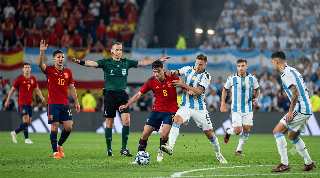
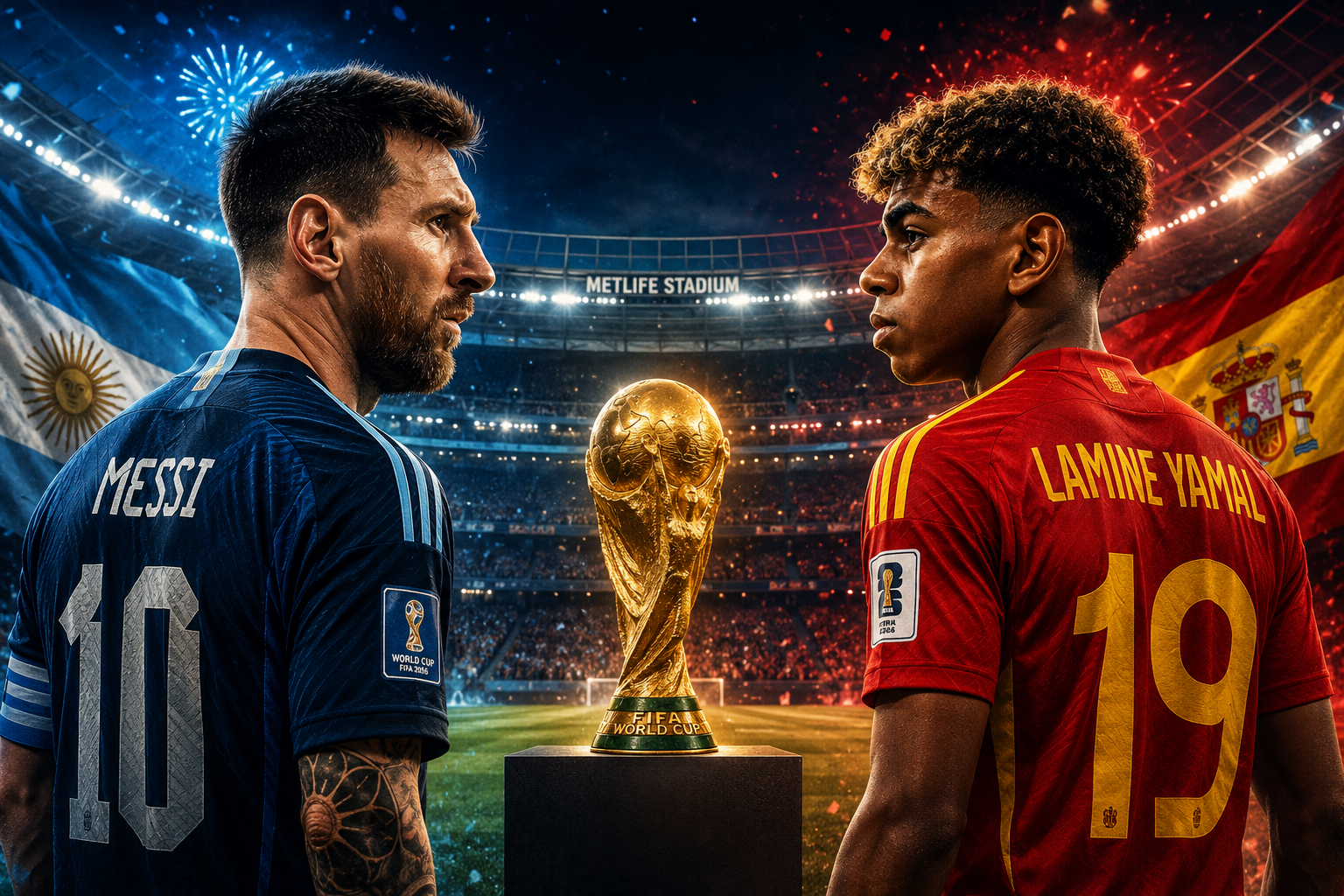
The largest World Cup in history will conclude with a final carrying almost every storyline the tournament could have produced. Defending champions Argentina face Spain on Sunday, July 19, at New York New Jersey Stadium in East Rutherford, with Lionel Messi potentially playing his final match at football’s biggest tournament.
This is not an underdog final. Argentina and Spain entered the competition as the two highest-ranked teams in the world. However, after a tournament filled with early eliminations, host-nation disappointments and dramatic knockout matches, their meeting still feels like an ending few could have confidently predicted.
Argentina arrive after winning all seven of their matches and scoring a tournament-leading 19 goals. Spain have won six and drawn one while conceding only a single goal. One finalist has repeatedly survived difficult situations, while the other has controlled almost every opponent placed in its path.
The Story the Co-Hosts Would Rather Forget
The 2026 tournament was the first men’s World Cup to feature 48 teams and the first to be jointly hosted by three countries. The United States, Mexico and Canada all reached the knockout stages, but none survived the Round of 16.
Canada’s best-ever World Cup campaign ended with a 3-0 defeat against Morocco. Mexico lost a dramatic 3-2 match against England in Mexico City, while Belgium eliminated the United States with a commanding 4-1 victory.
All three co-hosts departing during the same round created one of the tournament’s most significant patterns. Home support produced packed stadiums and memorable atmospheres, but it did not carry any of the three national teams into the quarterfinals.
A Tournament That Punished Famous Names
The co-hosts were not the only teams to experience disappointment. Germany, despite producing one of the tournament’s biggest group-stage victories, was eliminated by Paraguay on penalties in the Round of 32.
The Netherlands suffered a similar fate against Morocco. After holding the Dutch to a 1-1 draw, Morocco advanced through a penalty shootout, later defeated Canada and reached the quarterfinals before losing to France.
Those results demonstrated the value of the expanded format. More teams were given an opportunity to compete on the biggest stage, but the additional knockout round also created another dangerous obstacle for established contenders.
Messi’s Possible Final World Cup Chapter
Argentina’s journey has inevitably centred on Lionel Messi. At 39, the Argentine captain has not formally confirmed that this will be his final international appearance, but another World Cup campaign appears increasingly unlikely.
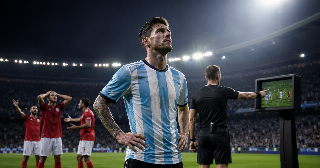
His influence was decisive in the semifinal against England. Argentina trailed after Anthony Gordon’s second-half goal, but Messi helped create both goals during a remarkable late comeback.
Enzo Fernández equalised in the 85th minute before substitute Lautaro Martínez scored the winner in stoppage time. Messi supplied both assists as Argentina completed a 2-1 victory and reached a second consecutive World Cup final.
Victory against Spain would give Argentina a fourth world title and make them the first country since Brazil in 1962 to win consecutive men’s World Cups. It would also provide Messi with another defining conclusion to a career already filled with historic moments.
Spain Took the Most Convincing Route
Spain’s journey has been built on control, defensive discipline and increasingly difficult opposition. After beating Austria in the Round of 32, Spain eliminated Portugal, Belgium and France in consecutive matches.
Their 2-0 semifinal victory over France was particularly impressive. Spain prevented a dangerous French attack led by Kylian Mbappé from scoring and reached their first World Cup final since winning the competition in 2010.
Luis de la Fuente’s team enter the final unbeaten in 37 matches. They have conceded only once during the tournament, demonstrating that Spain’s possession-based identity is now supported by one of international football’s strongest defensive structures.
Argentina’s Case for the Trophy
Argentina’s knockout route has required resilience. They defeated Cape Verde, recovered from two goals behind against Egypt, overcame Switzerland and then produced another comeback against England.
Lionel Scaloni still has 17 members of the squad that won the 2022 World Cup. That experience becomes particularly valuable in a final, where pressure, game management and emotional control can matter as much as tactical quality.
Messi remains the central creative force, but Argentina are not dependent on him scoring every goal. Fernández, Martínez, Julián Álvarez and Alexis Mac Allister provide several different ways to attack Spain’s defence.
Spain’s Case for the Trophy
Spain appear to be the more structurally balanced finalist. Their midfield can dominate possession, their defence has neutralised several elite attacks and their younger players provide enough speed to punish Argentina during transitions.
Rodri gives Spain control in midfield, while Lamine Yamal supplies unpredictability from wide areas. The 19-year-old Barcelona star now faces the player whose career has influenced an entire generation of footballers.
The Messi-Yamal comparison should not overshadow the wider contest, but it adds a remarkable sense of transition. One of the greatest players in football history could be playing his final World Cup match against the young talent many believe could shape the sport’s next era.
What to Watch in the Final
- Messi against Spain’s defence: Spain have conceded only once, but Messi requires only a few seconds of space to create a decisive opportunity.
- The midfield battle: Spain will attempt to control possession through Rodri and their technical midfielders, while Argentina will look for aggressive pressing and quick transitions.
- Lamine Yamal’s biggest test: The Spanish teenager will face an experienced Argentine defence in the most important match of his career.
- Argentina’s late-game resilience: Spain cannot assume the match is finished while Argentina remain within one goal, as England discovered in the semifinal.
One More Match Before the Final
France and England will meet in the third-place playoff before Sunday’s final. Both teams entered the tournament expecting to challenge for the trophy, but semifinal defeats left them competing for bronze instead.
The match also marks the end of Didier Deschamps’ long tenure as France manager, giving the French squad an opportunity to finish his final tournament with a victory.
Final Verdict
Spain enter the final as the more controlled and defensively complete team. Their victories over Portugal, Belgium and France suggest that they are peaking at exactly the right time.
Argentina, however, possess the experience of defending champions and have repeatedly demonstrated that difficult situations do not break their confidence. They have won every match, scored more goals than any other team and still possess the tournament’s most influential player.
Spain may hold a slight tactical advantage, but Argentina are built for matches decided by pressure, emotion and individual brilliance. Whether it ends with Messi lifting the trophy again or Yamal helping Spain begin a new era, the 2026 World Cup could hardly have asked for a more meaningful final.
Reporting verified against FIFA, Associated Press and Reuters tournament coverage available on July 18, 2026.