






For more than two centuries, global manufacturing has been built on an extractive model that depends heavily on mining natural resources, drilling for fossil fuels, and processing raw materials through energy-intensive industrial methods. From metals and plastics to textiles and chemicals, nearly every product used in modern society begins with the extraction of finite natural resources. While this approach has fueled economic growth and technological advancement, it has also contributed significantly to carbon emissions, environmental degradation, resource depletion, and industrial waste.
As the world faces increasing pressure to reduce its environmental footprint and build more sustainable supply chains, industries are beginning to rethink how products are made. A new generation of manufacturing is emerging one that replaces extraction with cultivation. Instead of relying on traditional factories that consume enormous amounts of energy and raw materials, companies are turning to synthetic biology and biomanufacturing to grow products using living microorganisms.
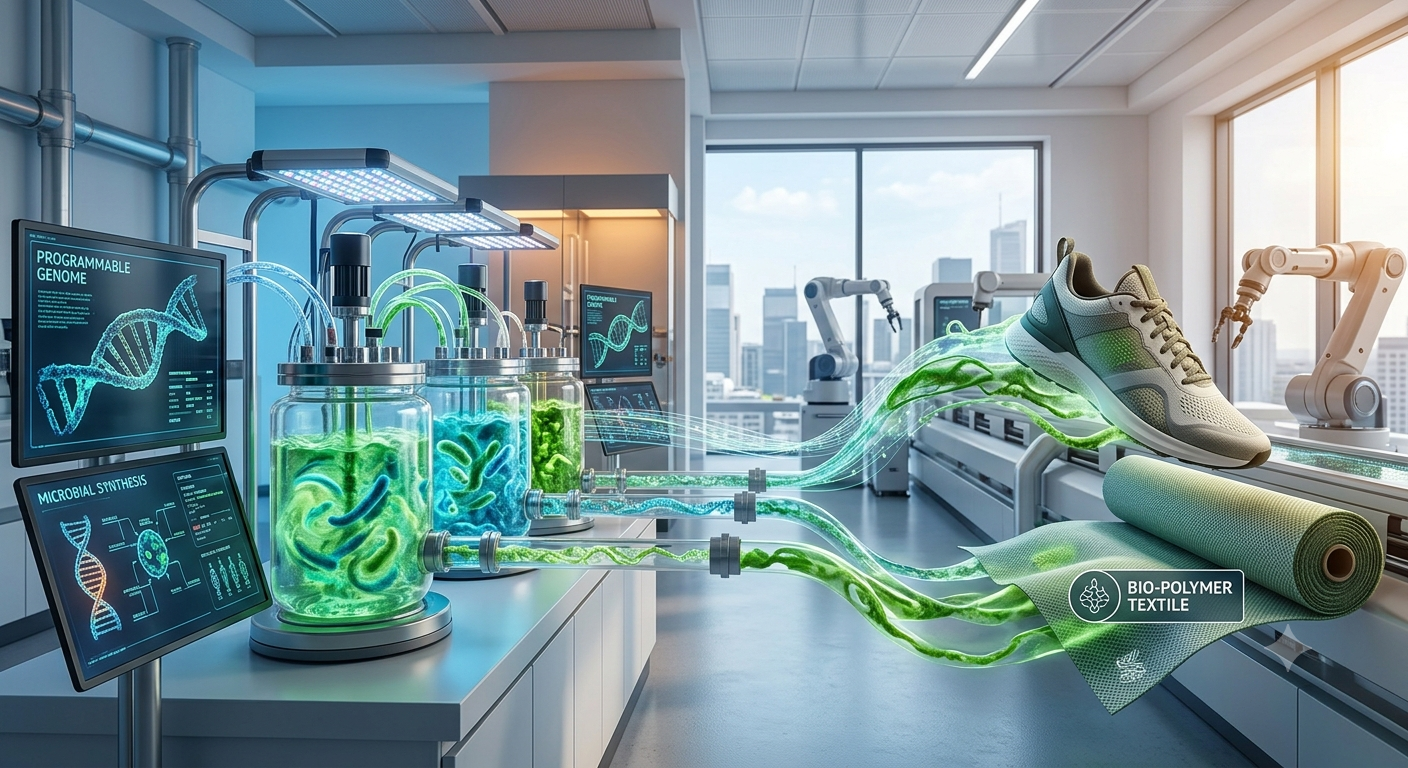
Inside advanced fermentation facilities, engineered microbes such as yeast, bacteria, and microalgae are being programmed to produce valuable materials that were once manufactured using petroleum, mining, or chemical refining. This biological approach has the potential to transform manufacturing by making production cleaner, more efficient, and significantly more sustainable.
The Science Behind Living Factories
At the heart of this manufacturing revolution lies synthetic biology, a field that combines biology, engineering, genetics, and computer science to design organisms capable of performing specific industrial tasks.
Scientists modify the DNA of microorganisms by inserting carefully designed genetic instructions. Just as software developers write code to instruct computers, bioengineers "program" living cells using DNA sequences composed of the four genetic building blocks—adenine (A), thymine (T), cytosine (C), and guanine (G).
Once programmed, these microorganisms function as microscopic production factories. When supplied with renewable feedstocks such as agricultural sugars, plant biomass, food waste, or even captured carbon dioxide, they naturally produce complex proteins, specialty chemicals, enzymes, bio-based polymers, and advanced materials.
Many of these biologically produced compounds are chemically identical to conventional products, while others offer improved strength, flexibility, durability, or environmental performance. Because the manufacturing process occurs under controlled biological conditions rather than high-temperature industrial refining, it typically consumes less energy and generates significantly lower greenhouse gas emissions.
Transforming Modern Industries
Biomanufacturing is rapidly moving beyond pharmaceutical research and entering mainstream industrial production. Companies across multiple sectors are investing heavily in biological manufacturing technologies to create sustainable alternatives to conventional materials.
Sustainable Textiles and Fashion
The textile industry has long depended on petroleum-derived synthetic fibers such as polyester and nylon. While durable and affordable, these materials contribute to plastic pollution and rely heavily on fossil fuel extraction.
Biotechnology companies are now developing advanced materials inspired by nature, including lab grown spider silk proteins, bio-based fibers, and mycelium leather produced from fungal root networks. These innovative materials offer exceptional strength, flexibility, and durability while significantly reducing environmental impact. As production scales, biological textiles may become a practical alternative for clothing, footwear, automotive interiors, and luxury fashion products.
Eco-Friendly Construction Materials
Construction remains one of the world's largest contributors to carbon emissions, particularly through cement production.
Researchers are developing engineered bacteria capable of naturally binding sand particles together to create durable construction materials without requiring the extremely high temperatures used in traditional cement manufacturing. Other companies are producing bio based insulation, self-healing concrete, and carbon-sequestering building materials that not only reduce emissions but actively capture carbon from the atmosphere.
These innovations have the potential to revolutionize sustainable construction while supporting global climate goals.
Cleaner Consumer Products
Many everyday household products—including detergents, cosmetics, cleaning supplies, food ingredients, and personal care products—contain chemicals traditionally produced from petroleum or palm oil.
Through precision fermentation, engineered microorganisms can manufacture these same ingredients using renewable biological feedstocks. This approach reduces dependence on environmentally sensitive resources while minimizing deforestation, chemical pollution, and industrial waste.
As consumers increasingly demand sustainable products, bio based consumer chemistry is becoming an important competitive advantage for manufacturers.
Challenges to Large-Scale Adoption
Despite its enormous promise, biological manufacturing still faces several important challenges before achieving widespread industrial adoption.
Scaling production from laboratory experiments to commercial manufacturing remains one of the industry's greatest obstacles. A process that performs successfully inside a small laboratory bioreactor does not always behave the same way when expanded to industrial fermentation tanks capable of holding hundreds of thousands of liters.
Maintaining stable biological performance over long production cycles requires careful control of temperature, nutrient supply, oxygen levels, and microbial health. Even small genetic changes within engineered organisms can affect production efficiency and product quality.
Building large-scale fermentation facilities also requires substantial financial investment. New production infrastructure, specialized equipment, and advanced quality control systems must compete economically with decades-old petrochemical industries that benefit from mature global supply chains and established manufacturing capacity.
In addition, governments continue developing regulatory frameworks to ensure genetically engineered microorganisms remain safely contained within industrial facilities while protecting both public health and the environment.
The Future of Biological Manufacturing
As advances in synthetic biology, artificial intelligence, automation, and genetic engineering continue to accelerate, biological manufacturing is expected to play an increasingly important role in the global economy.
Future manufacturing facilities may resemble highly automated fermentation plants rather than traditional heavy industrial factories. Instead of extracting finite natural resources from the Earth, industries will increasingly rely on renewable biological processes capable of producing advanced materials with lower environmental impact.
Biomanufacturing also supports the development of circular economies by converting agricultural waste, captured carbon dioxide, and renewable biomass into valuable industrial products, reducing waste while creating new economic opportunities.
Conclusion
The future of manufacturing is gradually shifting from extraction toward cultivation. Rather than relying solely on mining, drilling, and high-energy industrial processes, companies are beginning to harness the power of biology to grow the materials needed for modern life.
Although significant technical, financial, and regulatory challenges remain, synthetic biology has the potential to reshape global manufacturing by creating cleaner supply chains, reducing carbon emissions, conserving natural resources, and supporting sustainable industrial growth.
The companies investing in biological manufacturing today are not simply developing new production methods—they are laying the foundation for an industrial future where innovation works in harmony with nature. As this technology matures, biomanufacturing is poised to become one of the defining pillars of the next generation of sustainable industry