





Meta launched a powerful new AI image feature.
Days later, it was gone.
The technology giant has discontinued a controversial part of Muse Image after a rapid privacy backlash over how public Instagram content could be used to generate artificial intelligence images.
The feature allowed people to reference public Instagram accounts when creating AI-generated content.
But there was a problem.
Users and entertainment groups questioned why people had not been asked to actively opt in before their public content could be referenced in this way.
The criticism spread quickly.
Actors raised concerns.
Privacy discussions exploded online.
Users began sharing instructions explaining how to change their settings.
Then Meta pulled the feature.
One of the biggest technology companies in the world had launched a new AI capability.
It did not survive the week.
What Muse Image Was Designed to Do
Muse Image was introduced as Meta's new image-generation technology.
The model came from Meta Superintelligence Labs and was integrated with the company's AI products.
Users could generate images and make edits.
The system also included creative image manipulation capabilities.
But one feature immediately became controversial.
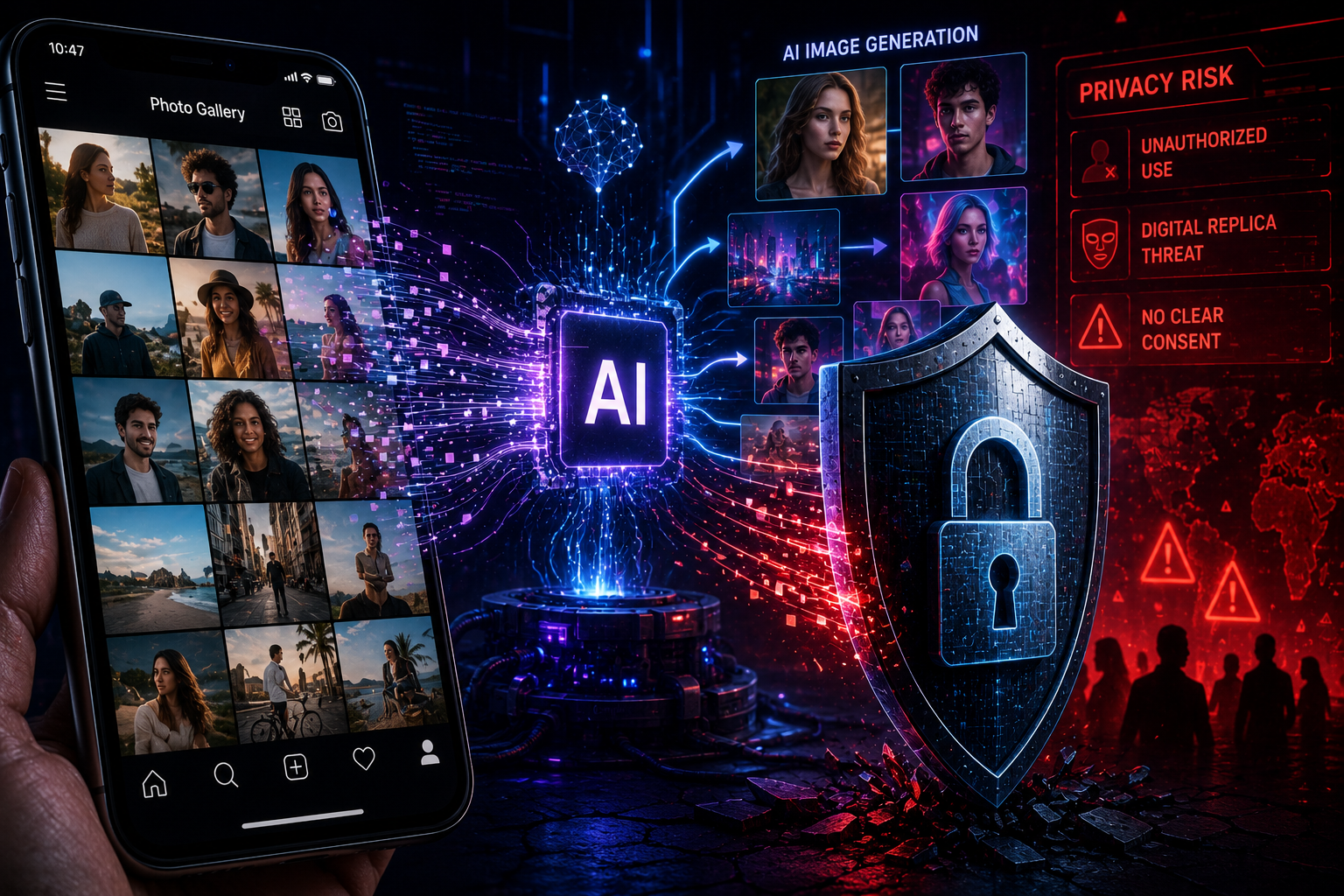
Public Instagram content could be referenced when users generated AI images.
This meant the technology could use publicly available photos connected to Instagram accounts as an input for AI creation.
For Meta, this was presented as a creative capability.
For critics, it created a serious consent problem.
Public Does Not Automatically Mean Permission
This is the central question behind the controversy.
If someone posts a photograph publicly, what exactly have they agreed to?
They have clearly chosen to make the original post visible.
But have they agreed for another person to use their appearance in an AI-generated image?
Critics argue these are two completely different actions.
A public Instagram account may belong to an actor.
A photographer.
A student.
A business owner.
Or an ordinary person sharing photographs with friends and followers.
The fact that an image can be viewed does not necessarily mean the person expects their content to become material for AI-generated creations.
Muse Image forced that question into the open.
The Feature Was Enabled Without Active Opt-In
The backlash became more intense because of how user control was handled.
Reuters reported that the feature was automatically enabled rather than requiring people to actively opt in.
That difference matters.
An opt-in system asks a person for permission before activating a feature.
An opt-out system places the responsibility on the user to discover the feature and disable it.
Privacy advocates have repeatedly criticised opt-out approaches for sensitive AI capabilities.
Many users do not regularly inspect every account setting.
Some may never know a new feature exists.
By the time they discover it, their public content may already have been referenced.
The Muse Image controversy became another example of why default settings can create enormous public anger.
Hollywood Quickly Entered the Fight
The entertainment industry was particularly concerned.
SAG-AFTRA, the union representing actors and other performers, criticised the feature and raised concerns about nonconsensual digital replication.
For actors, a face is not simply a profile picture.
Appearance can be part of a professional identity.
A performer's image has commercial value.
The ability to create artificial images referencing a person's public photographs creates difficult questions around permission and control.
SAG-AFTRA welcomed Meta's decision to remove the feature.
The reaction demonstrates how sensitive AI-generated identity has become in Hollywood.
One Mention Could Create an AI Image
The feature attracted additional attention because users could reference public accounts during image creation.
This reduced the technical difficulty of creating synthetic content connected to another person.
Previously, producing convincing manipulated imagery might have required specialist editing skills.
Generative AI is removing that barrier.
A user can describe an image.
Select a person or reference.
Allow the system to generate the result.
The easier the process becomes, the larger the potential audience for misuse.
That does not mean every user has harmful intentions.
Many people use AI image tools for harmless entertainment.
But privacy rules must also consider the users who do not.
Deepfakes Have Changed the Risk Completely
AI-generated images are improving rapidly.
A few years ago, synthetic faces often contained obvious mistakes.
Hands looked strange.
Skin appeared artificial.
Background details collapsed.
Modern systems can produce far more convincing results.
This creates a problem.
An AI image can place a person in a situation that never happened.
A fake photograph can spread across social media before the person depicted even knows it exists.
The image may later be proven false.
But screenshots remain.
Copies spread.
Search engines index discussions.
Reputational damage can happen before a correction reaches the same audience.
This is why consent around AI-generated identity is becoming so important.
Meta Says It Missed the Mark
Meta defended the original intention behind the technology.
The company said it wanted to provide a useful creative tool while giving people control over whether their public content could be referenced.
But following the backlash, Meta acknowledged that it had "missed the mark" and discontinued the feature.
That is a significant response.
Large technology companies do not normally abandon newly launched AI features within days without substantial pressure.
The speed of the reversal shows how quickly privacy criticism developed.
It also suggests technology companies are learning that AI features involving personal identity require a different level of caution.
The AI Was Not the Only Problem
The Muse Image controversy was not simply about whether the technology worked.
It was about product design.
Meta could build the feature.
The larger question was whether it should be enabled in that particular way.
This distinction is becoming increasingly important in artificial intelligence.
AI developers often focus on capability.
Can the model generate realistic video?
Can it clone a voice?
Can it recreate a face?
Can it search personal information?
But a technically impressive feature can create social problems if consent and privacy controls are added too late.
Muse Image shows that the way an AI capability is launched may be just as important as the underlying model.
Meta's AI Detection Technology Has Also Faced Questions
The controversy arrived as Meta's approach to AI-generated content was already under examination.
In separate testing, Reuters found that Meta's AI image detection system failed to identify 55% of cropped AI images generated by Muse Image in the test sample.
Experts told Reuters that watermark-based detection approaches have limitations.
This creates another difficult problem.
AI systems are becoming better at generating content.
Platforms are simultaneously trying to identify that content.
Simple edits such as cropping may affect detection systems.
The result is an ongoing technological race between generation and verification.
A Label Is Only Useful If Detection Works
Technology companies have discussed labelling AI-generated images as a way to reduce confusion.
The idea sounds simple.
Generate an AI image.
Detect it.
Add a label.
Let viewers know the content is synthetic.
But the system depends on reliable detection.
If an image can be altered and the detection signal disappears, the label may not follow the content as it spreads.
Users can take screenshots.
Images can be compressed.
Files can be edited.
Content can move between platforms.
The internet was not designed around permanent AI provenance.
Technology companies are now trying to build those protections after generative AI has already become widely available.
Instagram Users Are Becoming More Sensitive About AI
Social media users have experienced years of changing privacy settings, advertising systems and recommendation algorithms.
Artificial intelligence adds another layer of uncertainty.
People want to know whether their posts are being used to train AI.
They want to understand whether their faces can be referenced.
They want clear controls.
They want to know what happens to their information.
Technical privacy policies are often extremely long.
Most users do not read every update.
That creates a trust problem.
When a controversial feature suddenly becomes visible, users may assume decisions were deliberately hidden.
Even when a company provides settings, poor communication can create backlash.
The Default Setting May Be the Most Powerful Decision
One of the biggest lessons from this controversy has nothing to do with image quality.
It is about defaults.
Most users leave software settings unchanged.
That gives technology companies enormous power when selecting default options.
If a feature is off by default, only interested users activate it.
If it is on by default, millions may become part of the system immediately.
This is why privacy campaigners focus heavily on opt-in and opt-out design.
The difference may appear small inside a settings page.
At the scale of Instagram, it can affect enormous numbers of people.
AI Companies Are Learning That Consent Cannot Be an Afterthought
The generative AI industry is moving extremely quickly.
Companies are competing to launch better models.
Image generation.
Video creation.
Voice technology.
Digital agents.
Synthetic characters.
The pressure to release new features is intense.
But users are becoming more aware of the risks.
Creators are demanding control over their work.
Actors are protecting their likenesses.
Writers are challenging the use of copyrighted material.
Ordinary users are questioning what happens to their photographs.
The AI industry is entering a stage where technical innovation alone may not be enough.
Trust is becoming a product feature.
Could Meta Bring the Capability Back?
Meta has discontinued the controversial feature.
That does not necessarily mean similar technology will never return.
The company could redesign the system.
A future version might require explicit opt-in permission.
Users could potentially approve specific forms of AI referencing.
Stronger identity protections may be introduced.
Clearer notifications could explain how content is used.
The underlying demand for personalised AI imagery is unlikely to disappear.
The challenge is creating that experience without making people feel they have lost control of their own appearance.
This Could Become a Warning for Every AI Company
The speed of Meta's reversal will be studied across the technology industry.
A major AI feature launched.
Privacy criticism spread.
High-profile organisations objected.
The company acknowledged the problem.
The feature was removed within days.
Other technology companies are watching.
The lesson is straightforward.
A company may spend years building an advanced AI model.
But if users believe a feature ignores consent, public trust can collapse almost immediately.
The Future of AI May Depend on a Very Old Idea
Artificial intelligence is creating technologies that previous generations could barely imagine.
Systems can generate faces.
Clone voices.
Create films.
Write software.
Operate computers.
Yet one of the biggest challenges facing the industry is based on a very simple principle.
Permission.
People want control over their identities.
They want to understand how their information is used.
They want the ability to say yes before a technology company assumes they agree.
Meta's new AI feature lasted only days.
The model was powerful.
The controversy was bigger.
And the entire technology industry has received another reminder that the future of AI will not be decided by capability alone.
It will also be decided by consent.